

Quit your job, buy a ticket, get a tan, never go back! That's what you can do as a PADI instructor.
Scuba Instructor Jobs and Pay
If you are weighing up a career as a PADI scuba instructor, two questions decide it: what the work is actually like day to day, and what it pays. This page answers both, for Roatán and for the places instructors go afterwards. If you have not yet worked out what the qualification involves, how to become a scuba diving instructor covers the pathway and what each stage requires.
The career
Working as a PADI instructor
The variety of the work
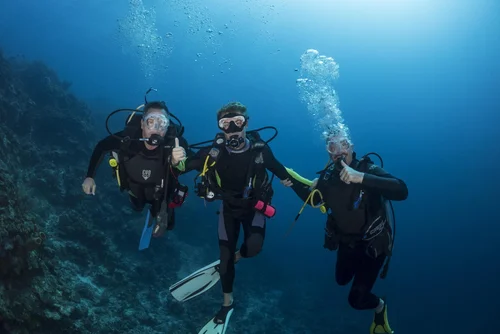
There's no typical day, and that's most of the appeal. One morning you might run an Open Water course for gap-year travellers seeing the underwater world for the first time; a few days later you're guiding a family through their first dives, or mentoring Divemaster trainees making the same career change you're weighing up now. Those trainees come from everywhere — accountants, police officers, veterans, software developers, farmers. Some days are full; on others you'll dive two tanks in the morning and have the afternoon free. Being the person who introduces someone to diving — the instructor they remember — is a real part of the reward, not a brochure line.
What instructors actually earn
Realistic monthly pay in USD, by typical role and region. The figures come from instructors the Course Director has trained and stayed in touch with, who have shared what they actually earn — not aspirational claims.
| Newly-certified instructor, small Roatán dive shop | $1,000–$3,000 |
|---|---|
| Larger Caribbean resort (full instructor) | $750–$2,500 |
| Southeast Asia (Thailand, Indonesia, Philippines) | $700–$2,200 |
| Liveaboard role | $2,000–$5,000 |
| Freelance independent instructor | Varies with the work you take |
| MSDT / Staff Instructor / Course Director | $3,000–$6,000 |
On Roatán the numbers are more specific, because these are the island's standard rates rather than a regional average: around $100 a student for Open Water, Advanced and Rescue courses, and $6 a diver when guiding certified divers. Working full time as an instructor here, that rarely comes out below $1,000 a month and rarely above $3,000 — the swing is the season, not the shop. The wider ranges in the table above cover other roles and other parts of the world.
Tips, accommodation and meals are often part of the package at resort and recreational operations, and can meaningfully change the headline number. Liveaboard roles typically include full board, which compresses your living costs substantially.
The cost of the IDC and the courses before it is modest next to most professional qualifications, and an instructor working full time often recoups the training investment within the first few months. If you are planning to teach part-time — which the freelance market below makes realistic — expect that to take longer. Earnings also swing with the season: on Roatán the busy season runs from January to August, and September to December is the quiet season, with a short Thanksgiving spike in November. Plan for the lean weeks as much as the busy ones.
Freelancing on Roatán
The way instructors are employed has changed a lot since 2020. It used to be normal to work full-time for one dive shop, but more and more instructors now work freelance. Roatán is one of the few places where that is a real option, because the shops here work that way.
The big advantage is choice. You don't have to commit to full-time hours: you decide when you work and who you work for. The balance of power used to sit firmly with the dive shops, and it has now moved towards the instructor. That flexibility suits digital nomads and retirees particularly well. It also means a newly qualified instructor is more likely to find at least some work, even if it isn't steady full-time employment. Full-time roles still exist for anyone who wants one.
The catch is that when work gets thin in the slow season, the shops will always look after their full-time staff first, so freelancing can be a double-edged sword. Roatán's freelance market is the exception rather than the rule, which is a large part of why it is a good island to teach your first courses on.
Where instructors find work
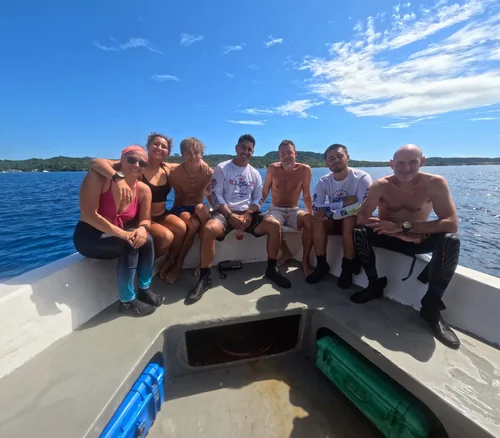
Of the instructors Go Pro Caribbean trains who look for work on Roatán, more than nine in ten find it, and the managers of many Roatán dive shops did their own IDC at Coconut Tree Divers — some twenty years ago, some as recently as three. Some new instructors already work at a dive centre near home and come to Roatán for the IDC — for the Course Director's experience and the island's conditions — then go back to it. Of the rest, most take their first job at Coconut Tree Divers, which hires its own instructors from the people it trains, or at one of the large number of Roatán dive shops that prioritise instructors trained on the island. Those shops do so for two reasons: they know and trust the training because they know and trust the Course Director, and an instructor trained here already knows the dive sites and how Roatán operates — the same familiar terrain that makes the first weeks of independent teaching easier. A second language opens more doors again.
Over more than twenty years of training dive professionals on Roatán, the patterns are reasonably stable. Two Florida-based candidates moved home after qualifying and became Course Directors themselves within three to four years. A larger number spent six months to two years working on Roatán, then moved on to Asia — most often Thailand, Indonesia, or the Philippines.
And many candidates worked as instructors for a year or two before moving into the career they'd actually been planning all along — marine conservation, teaching, law, finance, medicine. For them, the instructor stint was always going to be a fun sojourn before something more conventional. That's a legitimate version of the pathway too.
Divemaster jobs work the same way a step earlier, but paid work is harder to find. A Divemaster assists instructors on courses and guides certified divers. Divemaster vacancies — scuba divemaster jobs at shops and resorts, and divemaster jobs on liveaboards — are advertised on dive centres' own websites and social media and on dive-industry job boards. Two things make the competition stiffer. There are many more Divemasters competing for the work, because the cost of a Divemaster course is so much lower than the cost of becoming an instructor. And an instructor can do a Divemaster's job and many other duties besides, so when a Divemaster competes with an instructor for a vacancy, the instructor will invariably get hired.
Where you might live
Where you choose to work after qualifying shapes both the work and the life. A brief honest take on each main destination:
- Caribbean. Year-round work, established tourist economy. Pay is modest at smaller operations but tips are real and accommodation is often subsidised. A solid base for someone wanting to keep diving as a long-term career. Because the work runs all year, it pairs with seasonal jobs such as ski or snowboard instructing, and with seasons in other regions such as the Mediterranean (below).
- Southeast Asia. Lowest base pay in dollar terms, but the lowest cost of living, the largest concentration of dive shops, and the most varied diving in the world. The most common second posting for instructors who've started in the Caribbean.
- Red Sea. Strong reef and wreck diving, consistent year-round conditions. Pay typically better than Caribbean entry-level. Contracts are often shorter.
- Pacific (Fiji, Hawaii, the Indo-Pacific resorts). Higher-end resorts with better pay but fewer instructor openings and tighter visa and work-permit regimes.
- Mediterranean. Strict summer-season pattern, roughly May to October.
Why so many instructors stay on Roatán
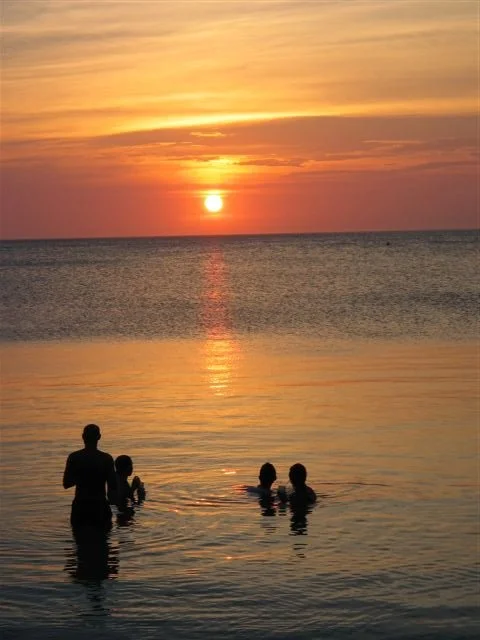
Plenty of instructors arrive planning a short stay and are still here years later. West End is small and walkable: cheap, well-equipped apartments, supermarkets better stocked than you'd expect when you want a taste of home, and bars showing the games you'd watch back in the US, Canada or Europe. There's a large ex-pat community and new restaurants open regularly as chefs pass through. Evenings sort themselves out — a snack at a beach bar, or a poolside barbecue with friends, often catching the sunset and watching for the green flash as it drops into the sea. What you spend living here is a large part of what makes the pay work, and the cost of living on Roatán is set out separately.
Days off have range: a round at the Black Pearl golf course, a jeep out to the off-road tracks that end at empty beaches, kayaking the mangrove canals, paddleboarding the sheltered inner lagoons, kiteboarding, or chartering a boat to Utila, the Cayos Cochinos, or further to Guatemala or Belize.
The honest reality
The lifestyle is the real pay
Compared against a salary in a conventional career at home, instructor pay will look small. The comparison that matters is total quality of life — what you spend, where you live, who you spend your days with, what you're doing for work — versus that conventional alternative. For some people the maths comes out clearly in favour of the instructor life; for others it doesn't. Be honest about which you are.
The work is physical and the season is the rhythm
Teaching multiple dives a day, six days a week, in tropical heat with full gear is genuinely demanding work. Most career instructors take a long break — often a month or more — once a year. Plan for this from the start rather than treating it as a surprise.
Visa and work-permit reality varies massively by country
Some destinations make it straightforward to work legally as a foreign instructor; others make it nearly impossible without specific business structures or local sponsorship. Before committing to a destination, research the specifics of working there.
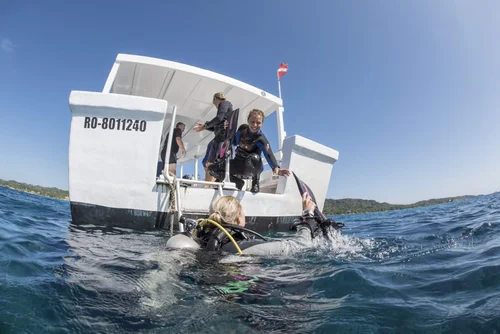
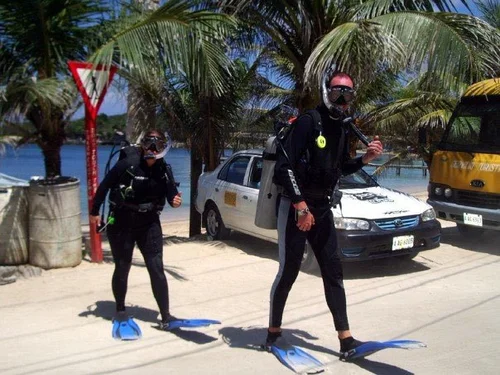
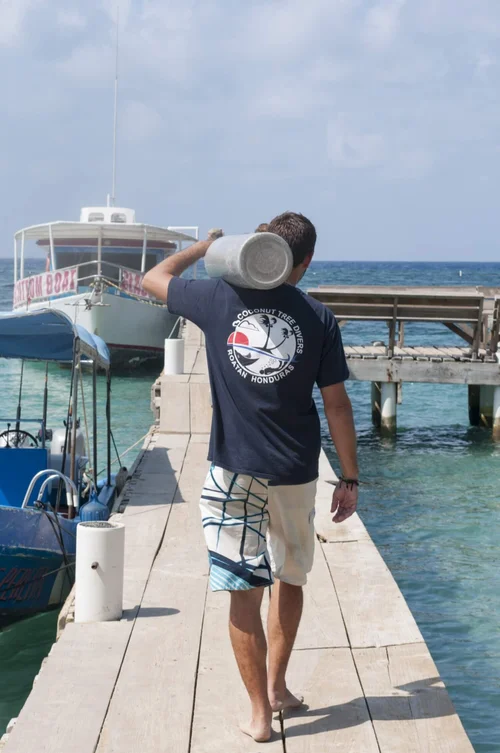



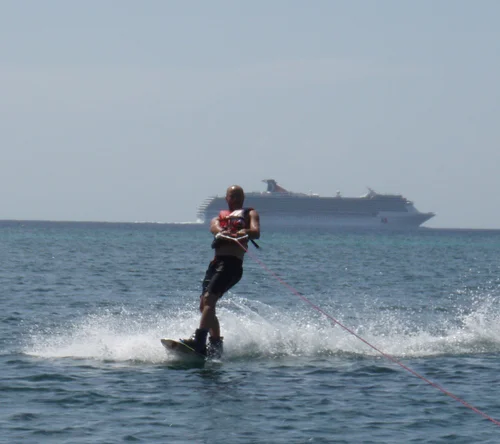

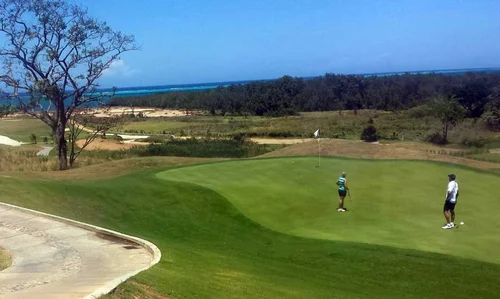

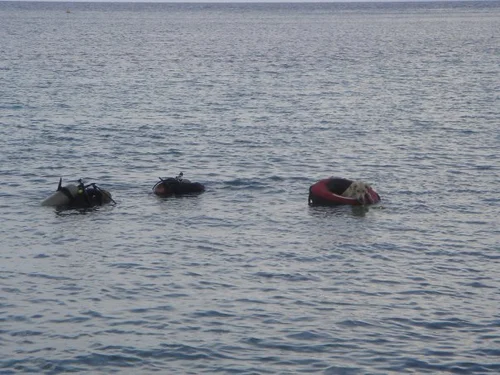
A few frames from training and the life that follows. Tap any image to enlarge.