
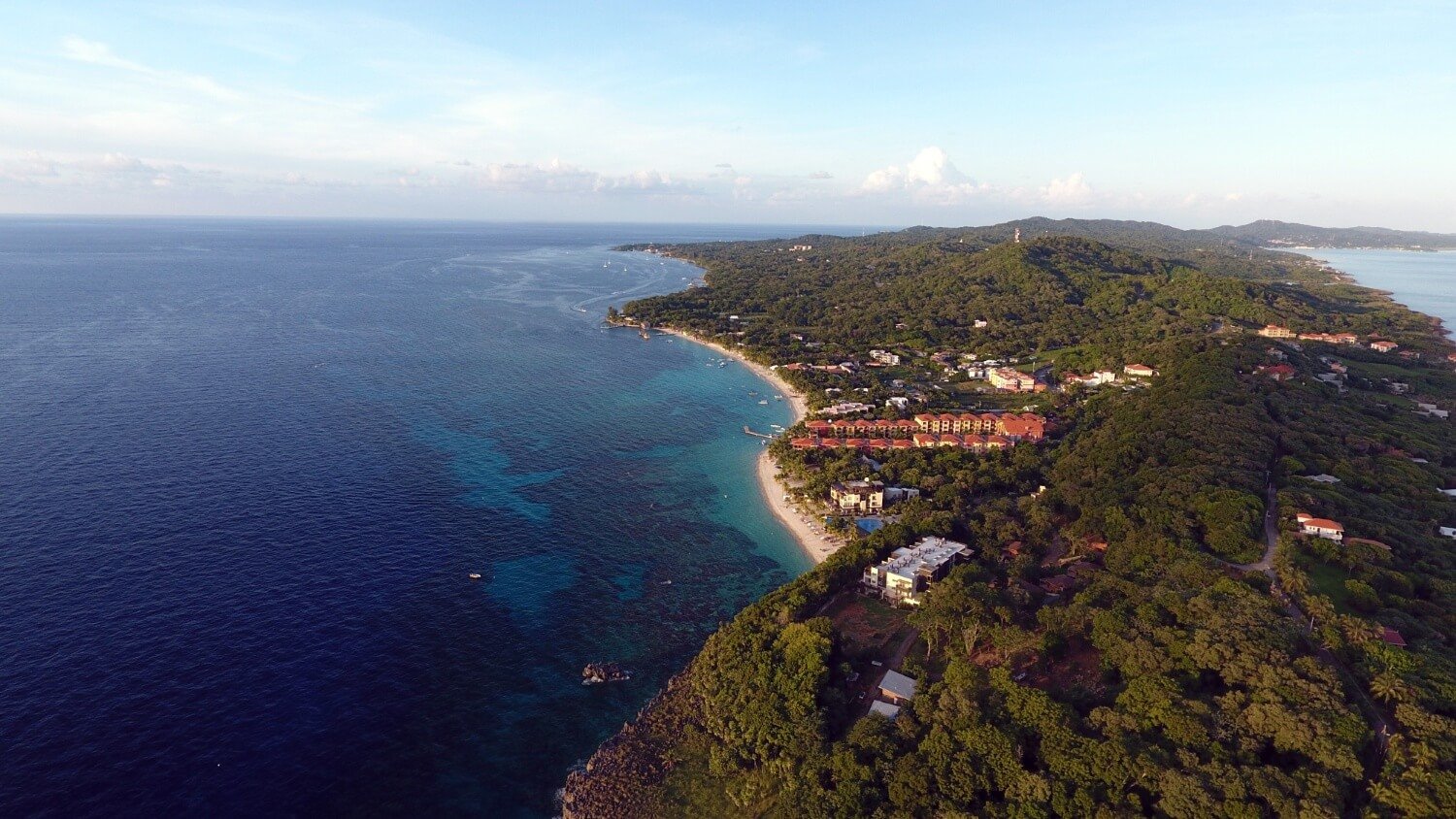
Is Roatan expensive?
The honest answer, in 2026 dollars.
UPDATED MAY 2026
Is Roatan Expensive? An Honest 2026 Guide
Updated May 2026
Short answer: it depends on how you live. PADI Pros at our on-property Pro House live on around $500–$1,400/month with rent, water, electricity and wifi all included. A solo Divemaster intern renting independently gets by on around $1,000/month. A typical IDC candidate or working dive professional in rented accommodation budgets $1,500–$2,300/month. A retired couple in their own rental sits closer to $3,000–$4,500/month. Below: the full breakdown — by category, by tier — based on what locals, dive shop staff, IDC candidates and Divemaster interns actually pay on Roatan in 2026.
The figures on this page reflect prices in West End and Sandy Bay, the dive and expat hubs on the western tip of Roatan. They are sourced from what residents, dive shop staff, IDC candidates and Divemaster interns at Coconut Tree Divers and Pro House paid in early 2026 — not aggregated from travel-comparison websites. Where Roatan diverges materially from mainland Honduras (electricity, certain imports, medical care), that is flagged in-line.
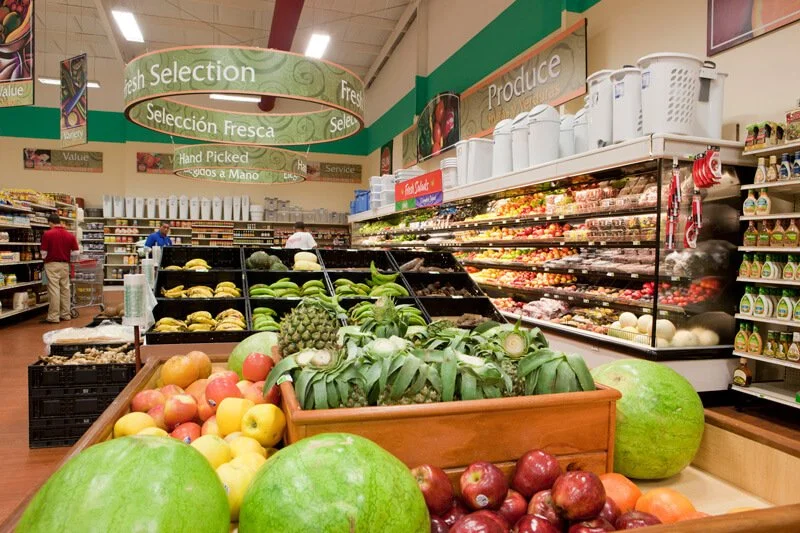
Locals shop here.
So do we.
What you'll spend each month
The single most useful thing this page can give you is an honest monthly total. The table below shows four tiers of life on Roatan in 2026 dollars — one for PADI Pros training with Go Pro Caribbean and staying at our on-property Pro House (where rent, water, electricity and wifi are all included), and three for everyone renting independently. Tier A is the leanest — a solo backpacker, a Divemaster intern, someone here primarily for the diving and not much else. Tier B is the most common — an IDC candidate, a working dive professional, a modest expat. Tier C is comfortable — a retired couple, a family, a remote worker who wants their own space. Pick the row that matches your situation and read down.
| Line item | Pro House DM / IDC intern Best value | Tier A Lean (rented) | Tier B Typical (rented) Most common | Tier C Comfortable (rented) |
|---|---|---|---|---|
| Accommodation (rent) | $150 ($5/night Pro House) | $400–$500 | $500–$700 | $700–$1,200 |
| Food at home (groceries) | $150–$300 | $100–$150 | $300–$500 | $500–$800 |
| Eating out | $50–$250 | $50–$100 | $200–$400 | $500–$1,000 |
| Drinks / social | $50–$250 | $30–$80 | $100–$200 | $200–$400 |
| Transport | included walking distance | $20–$50 | $50–$150 | $150–$400 |
| Electricity (RECO) | included | $20–$40 | $60–$100 | $100–$150 |
| Water (incl. drinking jugs, propane) | included | $0–$10 | $10–$20 | $10–$20 |
| Internet (home) | included wifi | inc. in rent / $25 | $30 | $40 |
| Mobile data | $16–$30 | $16 | $20 | $30 |
| Health insurance / medical | $10 DAN ~$100/yr | $50 | $100 | $150–$300 |
| Misc / extras (laundry, haircuts, optional specialty certs) | $75–$400 | $30 | $80 | $150 |
| Tier total (range) | $500–$1,400 | $716–$1,026 | $1,450–$2,300 | $2,530–$4,490 |
Scroll horizontally on smaller screens to see all four columns.
If you're training for a PADI IDC or Divemaster certification with us, Pro House on-property accommodation can replace the rental line item entirely.
Two things to know about these figures. First, they assume you live in West End or Sandy Bay — the dive and expat hubs on the western tip of the island, where most working dive professionals and short-term expats spend their time. Second, electricity is the single biggest variable in any Roatan budget. One Roatan resident shared three different RECO bills from the same apartment in the same year: $12 with fans only running 24/7, $30 with AC for an hour or two before bed, $60 with AC on auto at 25°C all night long. A working dive instructor in our poll added a useful tip: always ask the landlord what the previous month's RECO bill was before you sign — it can vary from $8 to $150. Plan for the upper end if you can't sleep without AC.
Where these figures come from: rent, RECO, food and drink ranges in the table above are sourced from a May 2026 informal poll of six Roatan residents — single expats, couples, working dive professionals, multi-year longstanding tenants — across West End, Sandy Bay, and Gibson Bight. Names withheld; figures aggregated and tiered. Drinks anchored on the current Roatan Oasis bar menu. Restaurant prices anchored on five current West End / popular menus (Roatan Oasis, Anthony's Chicken, Sandy Buns, Rotisserie Chicken, Jerk Chicken). Personal-care and grocery items cross-referenced against current Eldon's supermarket pricing (the most popular grocery store on the island, located in Coxen Hole).
School fees
If you're moving to Roatan with school-age children, the main private-school option for English-language education is Island Academy, where annual fees work out to around $400/month per child. There's a smaller homeschool/co-op community on the island as well. Public school is free and Spanish-language. Most expat families budget roughly $400–$600/month per child for private schooling all-in once books, uniforms, and incidentals are factored in.
Buying a car on Roatan
Most expats on Roatan don't own a car (see the Getting Around section below), but if you do need one — typically because you live east of West End or have school-age children — the buying market has its own quirks. Expect to pay 50–100% more than the equivalent vehicle would cost in the United States, and there's a real risk that a vehicle being sold as "imported from the US" was a US insurance write-off shipped here and rebuilt locally. Always have a mechanic check before buying. The best-value brand-new options are Central and South American-market pickups that aren't sold in the US (because they don't meet US emissions or safety regulations) — the Volkswagen Saveiro, RAM 700, and Renault Oroch all sell brand new on Roatan in the $20,000–$30,000 range with reasonable equipment levels. These tend to depreciate slower than US-imported vehicles because parts and service are easier to find on the mainland.
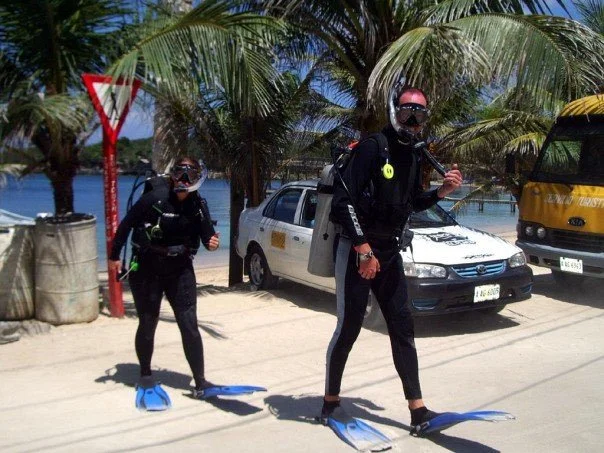
Eating, drinking, groceries
Roatan has something for every taste and budget when it comes to food. The cheapest hot meal in West End is the rotisserie chicken — ¼ chicken with two sides for $8, ½ chicken with two sides for $12, or a whole chicken combo with four sides for $25 — comfortably enough for a family. Below that, a baleada (a Honduran flour tortilla folded around beans, cheese and crema) from a roadside stand costs $1–$2 and is a perfectly normal lunch. Sandy Buns Bakery & Café is the most popular West End café for breakfast and lunch — burgers $10–$14, sandwiches $8–$14, salads $12, breakfast $4–$12. Anthony's Chicken and More is the popular waterfront seafood spot — fish tacos $12, fish sandwich $12, fillet fish $15, grilled lobster $30. The pattern across West End: $8–$12 for a casual lunch, $15–$25 for a sit-down dinner.
Meals — by price tier (West End, 2026)
| Meal | Cheap / local | Mid (incl. Roatan Oasis) | Premium (waterfront + decor) |
|---|---|---|---|
| Breakfast | Baleada $1–$2 | Sandy Buns $4–$8 · Big Timer / Daybreaker $10–$12 | — |
| Lunch | ¼ chicken + sides $8 | Sandy Buns burger / sandwich $10–$14 · Anthony's fish sandwich $12–$15 | Premium starters $18–$25 |
| Dinner | ½ chicken + sides $12 | Anthony's fish / shrimp $15–$20 · Roatan Oasis main $20–$27 | Beef Tenderloin 10oz $40 · Surf & Turf $55 |
| Family / table feast | Whole chicken combo $25 | Roatan Oasis full rack ribs $47 | Tomahawk 20oz $85 |
Roatan Oasis sits in the mid-price tier alongside Anthony's despite delivering top-tier food. The premium-tier column reflects venues where the price point is driven by waterfront real estate and upscale decor, not food quality.
Where Roatan's restaurant pricing gets interesting is the gap between best food and most expensive food — they are not the same place. Roatan has a genuine premium tier — flagship restaurants where a 20oz Tomahawk runs $85 and a 10oz beef tenderloin $40 — but you're paying for waterfront real estate and upscale decor, not for kitchen quality. The best food on the island sits at mid-tier prices, a few minutes inland. Roatan Oasis is the consensus answer: starters at $11–$16, mains mostly $20–$27 in a setting that consistently reviews as the best restaurant on the island. Local expats recommend it more than any other restaurant on Roatan by a comfortable margin — you typically need to book a couple of days in advance to get a table. A typical two-course dinner for two with drinks at Oasis lands around $80–$110 including the 15% food / 18% alcohol tax and tip — roughly half what you'd spend at the premium tier, with food most diners rate higher.
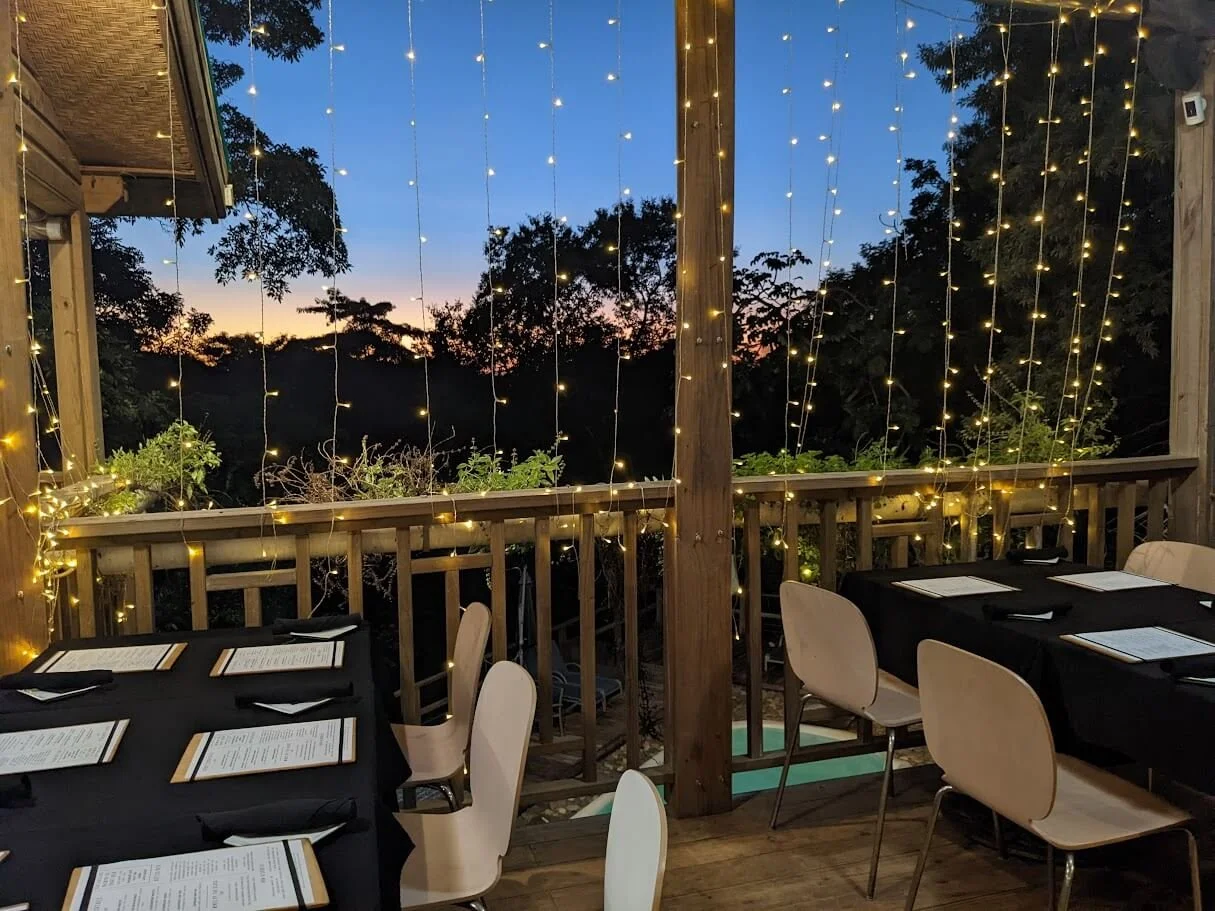
Where to eat
Roatan Oasis — the consensus best restaurant on the island
Mains $20–$27 in a setting most diners rate above the island's $40–$85 premium tier. Booking a couple of days ahead is the norm. On the same property as Pro House.
View the menuDrinks. A local beer (Imperial, Salva Vida, Barena) at a mid-tier West End restaurant is around $3. Imported beers like Coors Light or Michelob Ultra run $5, premium imports like Yuengling or Sierra Nevada $7, and craft like Dogfish Head 90 Minute IPA $8. Roatan Island Brewing Co. draft beer (Latin Lager, Juicy IPA, Pina Heffe, Hard Apple Cider) is $5 / $6 / $7 for 12oz / 16oz / 20oz. Craft cocktails at a sit-down restaurant are typically $8–$10 — house specials at Roatan Oasis include the Jalapeño Mojito ($8), Cucumber-Ginger Mule ($8), Spicy Watermelon Margarita ($9), Whiskey-Ginger Smash ($10) and Espresso Martini ($9). Wine by the glass is around $8 — premium Old Fashioned with Bullit, Maker's Mark, Knob Creek or Buffalo Trace runs $10–$14. Wine by the glass is $8 across most mid-upscale restaurants. Important: these are pre-tax bar menu prices — restaurants are required to charge 18% tax on alcohol (vs 15% on food), and most pre-tax menus add 10–15% tip on top. A $10 cocktail effectively costs around $13 all-in. Coffee at a West End café (Sandy Buns, Café 314, Café de Palo) is $2–$3 for an espresso or americano. Soft drinks $2, San Pellegrino $4, fresh-made limeade or house ginger beer $3–$4.
Drinks — mid-upscale restaurant pricing
| Item | Pre-tax | All-in (post-tax + tip) |
|---|---|---|
| Local beer — Imperial / Salva Vida / Barena | $3 | ~$4 |
| Imported beer — Michelob Ultra / Coors Light | $5 | ~$6.50 |
| Imported beer — Yuengling / Sierra Nevada | $7 | ~$9 |
| Craft beer — Dogfish Head 90min IPA | $8 | ~$10.50 |
| Heineken 0.0 (non-alcoholic) | $6 | ~$7 (15% food tax) |
| Roatan Island Brewing Co. draft 12oz | $5 | ~$6.50 |
| Roatan Island Brewing Co. draft 16oz | $6 | ~$8 |
| Roatan Island Brewing Co. draft 20oz | $7 | ~$9 |
| House craft cocktail (Jalapeño Mojito etc.) | $8 | ~$10.50 |
| Premium cocktail (Whiskey Smash, Margarita) | $9–$10 | ~$12–$13 |
| Old Fashioned — Bullit Bourbon | $10 | ~$13 |
| Old Fashioned — Maker's Mark | $12 | ~$16 |
| Old Fashioned — Knob Creek | $14 | ~$18 |
| Wine by the glass | $8 | ~$10.50 |
| Espresso / Americano (West End café) | $2–$3 | tax incl. |
| Soft drinks | $2 | tax incl. |
| San Pellegrino | $4 | tax incl. |
| Fresh limeade / house ginger beer | $3–$4 | tax incl. |
Cheap-drink anchors (corner store / pulpería pricing):
- Large bottle of Imperial from a corner store — cheapest beer option on the island
- Bottle of Flor de Caña rum (supermarket) — see grocery basket data
- 2-for-1 happy hour at most West End bars: 4–6 pm or 5–7 pm
If you want to drink and not break your monthly budget, two practical tips: (1) buy beer at the corner store and take it to the dock or beach — a large bottle of Imperial from any pulpería in West End is the cheapest beer on the island, and most West End bars will let you walk in with an open beer in hand so the first round inside is effectively free. (2) 2-for-1 happy hours that almost every bar in West End runs late afternoon — typically 4 pm to 6 pm or 5 pm to 7 pm — make even premium cocktails cost the same as a single beer.
Groceries. West End has one supermarket with the basics. A short $2.60 colectivo ride to Coxen Hole opens up two larger and better-stocked supermarkets — the most popular is Eldon's, which carries imported brands at imported-brand prices. To put numbers on it: a block of basic store-brand cheddar is around $5, while an equivalent block of imported French Babybel is closer to $12 for a 12-pack and a goat-cheese log will cost you $14. Halloumi, burrata, gorgonzola, and Dutch gouda are all stocked. The fish market and produce stalls are where most expats shop for fresh food; a budget-conscious household easily eats well on $30–$50 a week of groceries cooking at home, while a household relying on imported brands and prepared foods can clear $100–$150 a week without trying.
$3 (Shared) taxis. No need for a car if you live in West End.
Getting around
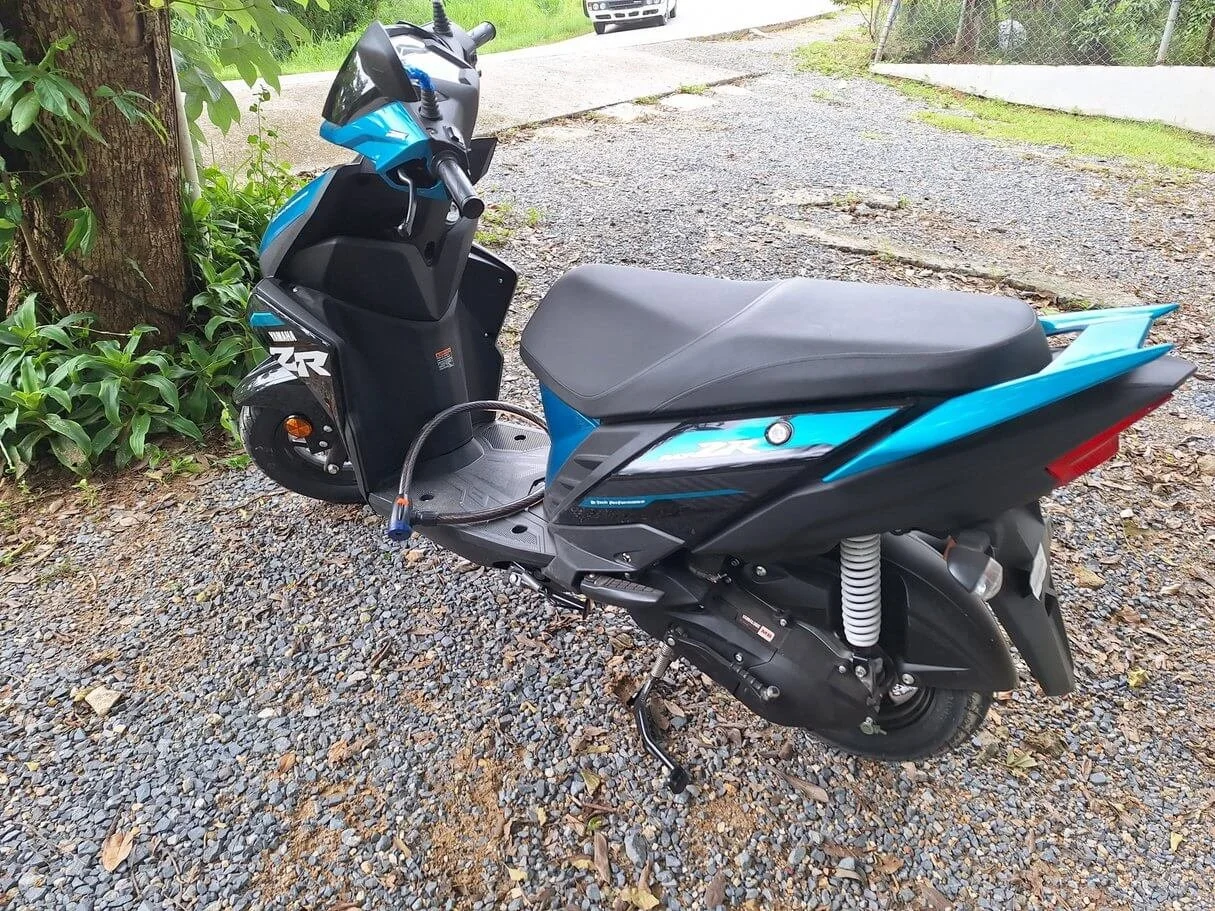
Many expats on Roatan don't own a car, and you don't need one if you live in West End or Sandy Bay. Shared taxis (colectivos) are the default — about $2.60 for a ride from West End to Coxen Hole, $3.70 to West Bay, $1.85 to Sandy Bay. The colectivo minimum fare is $1.50 for short hops. From RTB airport, private taxis charge a flat $30 to West End (per vehicle, 1–4 people, daytime hours); budget travellers walk the ~100 m to the main road and flag down a colectivo for $4–$5 instead. The water taxi between West End and West Bay is $5 per person but with a 4-person minimum per boat — so a solo crossing costs you the full $20. To explore the rest of the island under your own steam, Roacar in West End is the rental option most locals trust. Long-stay expats and DM interns who want their own wheels typically take monthly rates: a scooter is $375/month, a sedan $795/month — roughly half the per-day cost of a daily rental.
Per-trip transport — Roatan, 2026
| Route / mode | HNL | USD |
|---|---|---|
| West End → Coxen Hole (shared) | 70 | $2.60 |
| West End → West Bay (shared) | — | $3.70 (via West Bay → West End route, 100 HNL) |
| West End → Sandy Bay (shared) | 50 | $1.85 |
| West End → French Harbour (shared) | 300 | $11.11 |
| Colectivo minimum / short fare | 40 | $1.50 |
| Private taxi from RTB airport → West End (1–4 ppl, day) | — | $30 |
| Private taxi RTB → West Bay (1–4 ppl, day) | — | $35 |
| Private taxi RTB → Coxen Hole (1–4 ppl, day) | — | $10 |
| Budget option: colectivo from main road (100 m walk from RTB) → West End | 120–140 | $4.44–$5.19 |
| Water taxi West End ↔ West Bay | — | $5 per person, 4-person minimum ($20 boat / solo) |
- Colectivo fares are per person. Private taxi fares are per vehicle, 1–4 people split however you wish. Water-taxi fares are per person but with a 4-person minimum boat — so a solo crossing costs the full $20.
- Colectivo daytime fares listed; night-time fares typically 10–20 HNL higher (per the official tarifa).
- Private taxi prices are the official "Tarifa Taxi" sign at RTB airport for daytime hours (6 am – 6 pm).
- Roacar can sometimes arrange airport pickup or drop-off — not guaranteed, but worth asking when you book.
Vehicle rentals — Roacar, West End
| Vehicle | Daily | Weekly | Monthly |
|---|---|---|---|
| Scooter | $25 | $125 | $375 |
| Dirt bike | $35 | $175 | $450 |
| Sedan | $55 | $275 | $795 |
| SUV | $75 | $415 | $995 |
| Jeep | $155 | $750 | $1,995 |
Monthly rental rates work out at roughly half the per-day cost of a daily rental — worth doing the maths if you'll be on island more than two weeks. Source: Roacar West End.
Housing & rent
Pro House — the on-property accommodation Go Pro Caribbean operates for our own IDC and Divemaster candidates — has its own dedicated page with rates from $5/night for IDC candidates. This section is about the wider Roatan rental market — for retirees, expats, families, couples, anyone living independently and not training with Go Pro Caribbean.
Long-term rentals (6+ months) in West End and Sandy Bay span a wider range than most cost-of-living guides admit. Studios can be found from $350/month for a basic cabin studio, up to $500/month for a "big studio" right in West End that includes water and wifi. 1-bedroom apartments range from $350–$700/month depending on the building, the area, the length of tenancy, and what's bundled in. Landlords reward predictable, longstanding tenants with materially lower rates: one West End resident in this poll pays $400 for a 1-bedroom cabin that the landlord typically charges $500+ for new tenants. A 1-bedroom condo on the water in West End starts around $400/month at the low end. 2-bedroom houses typically start at $700–$1,200/month. Beachfront rentals carry a premium of roughly 30–50% over inland equivalents — the same beachfront pricing dynamic that pushes restaurant prices up in West Bay. Sandy Bay is slightly cheaper than West End for the same square footage. For retired couples, the typical monthly rent for a comfortable 2-bedroom or larger property is around $750–$1,500, depending heavily on location and condition — Sandy Bay and French Harbour have well-established expat retiree communities at this price point. Short-term rentals (under 6 months) typically run 2–3× the long-term rate per month, because they compete with the holiday-rental market.
A practical tip from our resident poll: about half the respondents had at least one bill bundled into rent — water, wifi, or even electricity. The other half paid each bill separately. There's no consistent Roatan norm. Always ask the landlord explicitly what's included before signing, and budget for the worst case if you're not sure. RECO bills can swing from $12 to $130 depending on AC use; getting hit with that on top of your rent because you didn't ask is a sharp reality check.
Long-term rental ranges — 2026
| Type | West End | Sandy Bay |
|---|---|---|
| Studio (long-term, monthly) | $350–$700 | $400–$500 |
| 1-bedroom (long-term, monthly) | $350–$700 | $500–$650 |
| 1-bed condo on the water | from $400 | — |
| 2-bedroom houses | $700–$1,200 | $600–$1,000 |
| Beachfront premium | +30–50% | +30–50% |
| Retiree market 2-bed (median band) | — | $750–$1,500 |
Patterns from the resident poll:
- Studios sit anywhere from $350 (basic cabin) to $700 (premium with everything included)
- 1-bedrooms span the full range based on tenancy length and inclusions
- The "longstanding tenant" discount can be 20%+ off the asking rate
- Inclusive bills (water, wifi, sometimes RECO) are worth asking about — they shift the effective rent meaningfully
- Working dive instructors and short-term expats cluster at the $350–$500 end
- Retiree couples cluster at the $750–$1,500 band for a comfortable 2-bedroom
Utilities, internet, mobile
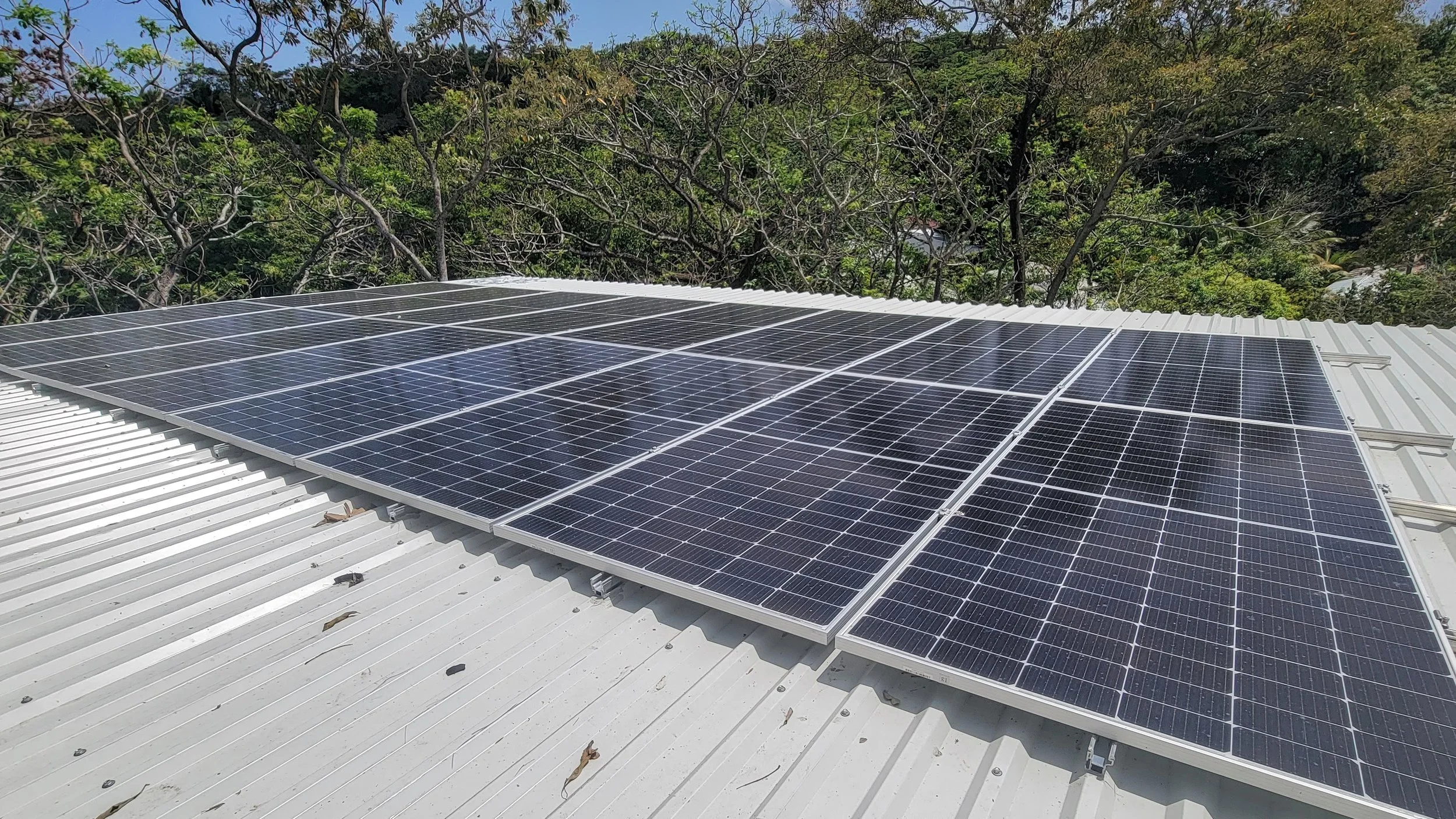
The most expensive single line item in many Roatan households is electricity. RECO (Roatán Electric Company) is the only provider on the island, and rates are well above mainland Honduras and most US/UK rates. A frugal household with no air conditioning runs $10 to $30 a month. Add an AC unit running an hour or two before bed and the bill jumps to $30–$60. Run AC on auto at 25°C all night and you'll typically clear $60–$120/month, with summer (April–August) bills sometimes hitting $130+ even on the same usage pattern. The single biggest cost-of-living lever you can pull on Roatan is being thoughtful with AC.
Water. Aguas de Roatán is the municipal water company. The basic monthly bill is roughly $10–$20 for a household, though many rentals include water in the rent — always ask before signing. Some rentals bundle water into the RECO bill rather than billing separately. Reliability varies — outages happen, particularly in the dry season (Feb–May). Most expat households have a water tank or cistern as backup. Drinking water comes in 5-gallon delivered jugs — typically $3–$5 per jug delivered to your door, working out to $10–$20/month for a single person and around $20/month for a couple.
Hot water. Plumbed hot water in the shower is the norm in West End and Sandy Bay rentals — most Roatan accommodation is built closer to US standards, with a hot water tank or on-demand heater wired into the property. But it's not universal, and always ask the landlord explicitly before signing any lease. A property without plumbed hot water typically uses an electric showerhead heater instead, which is significantly less comfortable and a known shock risk if the wiring isn't done well.
Mobile data — pay as you go. A practical reality most cost-of-living guides miss: getting a monthly cell-phone contract on Roatan requires Honduran residency. Visitors and short-term expats use prepaid SIM cards instead, topping up as needed. The two major providers are Tigo and Claro, with similar pricing. Tigo's Superpack prepaid bundles in May 2026 run as follows:
Tigo Superpack prepaid bundles — May 2026
| Pack | Validity | Lempira | USD |
|---|---|---|---|
| 2.5GB Superpack | 1 day | L36 | ~$1.33 |
| 7GB + unlimited calls | 3 days | L67 | ~$2.48 |
| 13GB + unlimited calls | 7 days | L122 | ~$4.52 |
| 17.5GB + unlimited calls | 10 days | L165 | ~$6.11 |
| 25.5GB + unlimited calls | 15 days | L235 | ~$8.70 |
Two 15-day Superpacks cover a full month of heavy data use for around $17/month — and that's heavy use. Lighter users typically spend $10–$20/month topping up as they go. Compared with US/UK monthly contracts at $50+, Roatan mobile data is genuinely cheap.
Home internet. Starlink is available on Roatan and is Lps1200/month (approx $50) but the hardware cost around $400. Maxcom is another cabled (frequent outages) provider for home internet. A residential plan with reasonable speed runs roughly $30–$40/month. The fibre rollout is patchy — some streets have it, some don't, so always check coverage before signing a lease somewhere on the assumption you'll have fast internet at home. Most dive shops, restaurants and cafés have free WiFi as a fallback.
Money & banking
The local currency is the Honduran lempira (HNL). It is loosely pegged to the US dollar — the rate is currently around 1 USD = 27 HNL. US dollars are widely accepted everywhere on Roatan — most restaurants, taxis, and dive shops will quote you in dollars and accept either currency. Mainland Honduras is more lempira-dominant. The major banks have ATMs in Coxen Hole and a smaller cluster in West End. ATM withdrawal fees vary but are typically a few dollars per transaction; per-transaction caps tend to sit around L4,000–L5,000 (~$150–$185).
No need to pre-order lempira from your home bank. US dollars are universally accepted on Roatan, and you'll typically receive your change in lempira — meaning you'll accumulate local currency naturally over your first few transactions, without paying the inflated exchange rates and fees that home-country banks and airport currency-exchange desks charge for foreign cash. One non-obvious requirement on the USD bills you bring: they must be pristine. No writing, no stamped marks, no ink, no tears — not even small ones. Honduran businesses examine US bills carefully before accepting them, and any imperfection will be rejected. This is not negotiable, do not assume your slightly-torn note will get through — it won't, and the rule is consistent across the country. Bring crisp, clean US bills directly from your bank, and check each one before you travel. Damaged USD notes are essentially worthless in Honduras.
Credit cards are accepted in some places but not most. Larger supermarkets, hotels, and dive shops take AMEX, Visa and Mastercard. Restaurants, taxis, smaller shops, fish markets, and roadside stands do not. Always carry US dollars or lempira in cash. PayPal is widely used for online deposits and is worth setting up before you arrive.
Travel cards & multi-currency accounts
The modern travel-money solution — multi-currency cards. Two services are worth setting up before travelling to Roatan, particularly for stays longer than a couple of weeks: Wise (wise.com) and Revolut (revolut.com). Both are free to open, both give you a multi-currency account with a debit card, and both solve several Roatan-specific problems at once:
- Better FX rates and lower commission on ATM withdrawals than your home bank typically charges.
- Card-cloning protection — keep only a small working balance in the Wise/Revolut account, topped up from your main account as needed. If the card gets cloned, only the small balance is exposed rather than your full bank balance. Cloning isn't currently a major problem on Roatan but has been in the past, and the protection costs nothing.
- Backup card if an ATM swallows your primary card.
- Business and person-to-person transfers — many Roatan businesses either charge a significant percentage fee for credit-card payments or don't accept cards at all, but will happily accept a Wise or Revolut transfer instead. Think of it as a Zelle or Venmo equivalent that works internationally.
Setup takes a few minutes online and is best done weeks or months before travel rather than at the airport. Neither service typically affects your credit score — they're money accounts, not credit products. Both are free to use. For anyone who travels internationally with any regularity, having at least one of these set up is close to a no-brainer regardless of destination.
We earn a small commission if you sign up via these links — it doesn't cost you anything.
Healthcare — what to actually plan for
Don't come to Roatan expecting hospital-grade medical care. Roatan handles routine and minor cases well — clinics, GPs, basic X-rays and ultrasound (multiple clinics on the island have both), dental work, common prescriptions — and there's a free public hospital for stabilisation in genuine emergencies. But the island has no MRI machine and is not equipped for serious conditions, complex diagnostics, or major procedures. The one positive worth flagging upfront: the recompression chamber on the island is good and well-managed — Roatan is genuinely a safe place to dive from a decompression-illness standpoint, and the chamber facility is one of the things long-term dive professionals here actually trust.
If you are visiting Roatan, the single most important medical step you can take before arrival is comprehensive travel insurance that covers emergency medical evacuation (MEDIVAC) — not just basic emergency treatment. Hopefully you'll never need it. If you do, the cost difference between a policy that covers MEDIVAC and one that doesn't can run into six figures. DAN dive accident insurance is essential additionally for any active diver — the recompression chamber on Roatan is real and good, but DAN coverage handles the broader treatment chain and any onward transport that may be needed after the chamber session.
For residents, the practical pattern most long-term expats follow is: handle anything trivial — sprains, basic illness, routine prescriptions — on Roatan; route anything serious or imaging-related to mainland Honduras, specifically San Pedro Sula (SAP). The mainland's private hospitals are well-equipped to international standards. There is genuinely good and reasonably-priced local primary care on Roatan at three clinics most expats trust:
- Anthony's Key Resort doctor's clinic — a long-time expat favourite. Typical consultation around $25. X-ray and ultrasound on-site.
- Clínica Esperanza in Sandy Bay — walk-in care is free, or $20 to skip the queue (which can otherwise run several hours). X-ray and ultrasound on-site.
- Island Med (+504 9481-8720) — another well-regarded clinic with X-ray and ultrasound on-site, comparable consultation pricing.
All three are dramatically more reasonable than the island's private emergency rooms (see below).
For genuine emergencies, the local public hospital — Hospital Satuya — is the answer most expats trust. Care at Satuya is free. The facility is not on a level with US or European hospitals, and isn't equipped for complex procedures or imaging beyond basic X-ray. But it can stabilise a serious patient prior to medevac — which is exactly the role you need a local hospital to play if you're routing serious cases to mainland SAP or back home. Avoid the island's private emergency rooms (see callout below); Satuya is dramatically more reasonable for emergency stabilisation, and the staff there handle emergency intakes regularly.
Roatan dental work is one of the genuine cost-of-living wins for expats. A cleaning runs around $40, a filling roughly $40, and a crown around $300 — a fraction of US prices. Dr Vanessa Galindo in Coral Stone (+504 9885-6686) is one of several well-regarded local dentists; many long-term expats deliberately schedule routine dental work for when they're on the island rather than at home.
Pharmacies and prescriptions on Roatan work differently from the US/UK. Pharmacies in West End and Coxen Hole stock most common medications, and most prescription medications can be purchased over the counter without a prescription. Generic versions of common medications are widely available and dramatically cheaper than US equivalents. This combined with the cheap GP consultation tier means the day-to-day medical cost of living for a healthy adult on Roatan is genuinely low — most expats budget $50–$100/month for routine medical including occasional consultations and prescriptions, plus DAN dive accident insurance at around $80–$130/year for active divers.
Bottom line: Roatan is good for routine and minor care, good for dental work (a cost-of-living win), good for dive safety with the chamber on-island, and adequate for emergency stabilisation at the free public hospital — but not the place for serious or complex medical needs. For that, the practical answer is to fly to mainland SAP, where the cost is a fraction of the US equivalent. Visitors: comprehensive insurance with MEDIVAC, plus DAN if diving. Residents: routine local care at Anthony's Key Resort doctor, Clínica Esperanza, or Island Med; dental work locally; Hospital Satuya for emergency stabilisation prior to medevac; mainland SAP for anything serious; separate DAN policy for divers. Plan for that, and the island's medical limitations stop being a concern.
How Roatan compares
Roatan is cheap by Caribbean standards but not the cheapest place to live in Central America. The table below puts it in context for the two audiences who most often land on this page: people choosing between Caribbean / Central American dive destinations, and people thinking about retirement abroad against a US baseline.
Roatan vs Utila vs US baseline — mid-tier monthly
| Place | Mid-tier monthly | Notes |
|---|---|---|
| Roatan, Honduras | $1,450–$2,300 | This page |
| Utila, Honduras | $1,300–$2,000 | Cheaper at the entry-level rent (unless comparing with staying in the GoPro Caribbean subsidized accommodation) and on bar/restaurant drinks (~25%; store-bought alcohol the same on both islands). Per-kWh electricity is higher than Roatan and plumbed hot water less common. Gap reverses at upper-mid and premium restaurant tiers — Roatan more expensive there. Rougher infrastructure overall — fewer flights, smaller hospitals, less reliable services. |
| Florida (US baseline) | $3,500–$5,000 | For US visitors comparing — rent dominates the gap |
Frequently asked questions
Is Roatan expensive?
Compared to other Caribbean islands, no — Roatan is significantly cheaper than the Cayman Islands, Barbados, or Belize. Compared to mainland Honduras, however, Roatan is more expensive — imported goods cost more here, and electricity (RECO) is famously high. A comfortable monthly budget for one person in rented accommodation falls between $1,450 and $2,300; PADI Pros training with us at our Pro House live on $500–$1,400 because rent, water, electricity and wifi are all included.
How much does it cost to live in Roatan per month?
A DM or IDC candidate at our Pro House — where rent, water, electricity and wifi are all included — typically lives on $500–$1,400 a month. A solo Divemaster intern renting independently elsewhere on the island can live on $716–$1,026. A typical IDC candidate or working dive professional in rented accommodation budgets $1,450–$2,300. A retired couple in their own rental will spend $2,530–$4,490. The full breakdown is in the budget table above.
Is Roatan cheaper than the US?
Yes, substantially. A typical American household spends roughly 3–4× what an equivalent household on Roatan spends — the bulk of that gap is housing, healthcare and transport. Specific items where Roatan costs the same or more than the US: imported electronics, gasoline, electricity per kWh, imported food brands.
What currency is used in Roatan?
The Honduran lempira (HNL). It is loosely pegged to the US dollar at approximately 1 USD = 27 HNL. US dollars are accepted almost everywhere on Roatan — taxis, restaurants, dive shops, and most retail. Mainland Honduras is more lempira-dominant. ATMs in Coxen Hole and West End dispense lempira, with some dispensing both.
Can I retire in Roatan, Honduras?
Yes. Honduras has a residency programme that's relatively accessible compared to other Latin American countries. Many North American and European retirees live in Sandy Bay, French Harbour, or the more upscale gated developments around Pristine Bay. A typical retired couple's monthly rent for a comfortable 2-bedroom or larger property runs $750–$1,500, with all-in monthly budgets typically starting around $2,500/month for a couple in modest accommodation. Healthcare is the main consideration — Roatan does not have advanced medical infrastructure, so retirees should plan for routine care locally and route serious or complex cases to mainland Honduras (San Pedro Sula) or their home country. See the Healthcare section above.
Is Roatan cheaper than Utila?
Slightly, and the picture is more nuanced than expat folklore suggests. Sit-down dinner mains in Utila typically run $15–$19 versus $15–$20 in West End Roatan — practically identical at the mid-tier. Burgers are roughly comparable, sometimes a bit more expensive on Utila. Beer and cocktails at bars and restaurants are about 25% cheaper on Utila — that's the clearest day-to-day gap. Store-bought alcohol from supermarkets and corner shops is the same price on both islands. The biggest difference is at the upper-mid steakhouse tier — an 8oz tenderloin at a typical Utila steakhouse runs around $25 post-tax versus $30+ at a comparable Roatan venue. At the premium / waterfront tier, Roatan is meaningfully more expensive — a flagship 20oz Tomahawk on Roatan is $85 all-in versus around $68 post-tax on Utila — but most expats don't eat at this tier regularly. Two often-overlooked points. First, Utila's per-kWh electricity rates are typically higher than Roatan's — Roatan RECO runs $0.30–$0.40 per kWh depending on global fuel prices, while Utila commonly hits $0.45+/kWh — so an AC-heavy lifestyle costs more on Utila despite the smaller-island reputation. Second, plumbed hot water is far less common in Utila accommodation; many rentals use electric showerhead heaters — locally nicknamed widow-makers for the proximity of mains wiring to running water. On Roatan, plumbed hot water is the norm in West End and Sandy Bay rentals because most accommodation is built closer to US standards. Rent at the very basic end is broadly comparable on both islands — $300/month for very basic, $400–$500/month for a shared 2-bed if you find one — though demand keeps these scarce. Net result: Utila is cheaper on entry-level rent, on bar/restaurant drinks, and marginally cheaper at upper-mid restaurant tiers — but more expensive on per-kWh electricity and meaningfully more rustic on accommodation comfort. The bigger trade-off is infrastructure — fewer flights, smaller hospitals, fewer supermarkets, less stable services. Roatan has the international airport and the better overall infrastructure. For a 2-week dive vacation, Utila wins on cost-per-day. For 6 months or longer, most expats find Roatan's infrastructure plus the comfort baseline — hot water, hospitals, choice of supermarkets — is worth the marginal cost difference.
Are credit cards accepted in Roatan?
In some places yes, many places no. Larger supermarkets, hotels, and dive shops accept Visa and Mastercard. Smaller restaurants, taxis, and local shops do not. Always carry US dollars or lempira in cash. PayPal is widely used and is worth setting up before you arrive. Use ATMs inside bank branches in preference to standalone ones — card skimming does happen at unattended terminals.
What are the downsides or hidden costs of living in Roatan?
Honest answer: electricity (RECO) is expensive, water can be unreliable in the dry season, internet outages happen, hurricanes are rare but real, and healthcare for serious conditions requires a flight to mainland Honduras or your home country. Imported goods (electronics, specific food brands, branded clothing) cost more than in the US or Europe. The other side of this is that the things Roatan offers — the diving, the climate, the community — are not available at any price elsewhere.
Got a specific question about life on Roatan?
If you're planning a move, a long stay, or an IDC or Divemaster training trip and want to talk through specifics — what an IDC candidate's actual monthly total tends to be, where to look for rentals, what the medical situation is for someone with a particular condition — message Go Pro Caribbean directly.