Teach the specialties you love — not the ones you were told to get

PADI Specialty Instructor Training and MSDT Preparation

16
Specialties to Choose From
3
Additional Ratings Needed
$709
All-in Incl. PADI Fees
25
Diver Certs Also Required

To become a PADI Master Scuba Diver Trainer (MSDT), you need two things: five PADI specialty instructor certifications, and 25 certified divers in your logbook. The MSDT rating is the next step after OWSI — a recognised mark of a well-rounded instructor with genuine breadth of teaching experience.

Your Go Pro Caribbean IDC already takes care of two of those five specialty ratings. Enriched Air (Nitrox) and Emergency Oxygen Provider are delivered inside every IDC. This programme covers the three additional specialty instructor certifications you need, chosen from 16 specialties available at Coconut Tree Divers in West End, Roatan, and it runs immediately after your Instructor Examination.

You already have two of the five — your IDC took care of that

The Enriched Air and Emergency Oxygen Provider instructor ratings

The two ratings your IDC includes are Enriched Air Diver Instructor and Emergency Oxygen Provider Instructor. Each is a PADI Specialty Instructor rating, so each counts as one of the five that Master Scuba Diver Trainer requires, and the MSDT Prep Programme adds the other three.

Enriched Air Diver Instructor lets you teach the PADI Enriched Air Diver course: oxygen physiology, gas analysis and planning dives on nitrox for longer bottom times. It is the most popular specialty in diving, and nearly every recreational dive centre wants instructors who can teach it. It is particularly valuable in areas that are seasonal: since it can be taught without dives, it is a great "off-season" course to promote customer engagement and activity.

Emergency Oxygen Provider Instructor lets you teach the PADI Emergency Oxygen Provider course: recognising decompression-related illness, giving emergency oxygen and responding to an emergency on a dive boat. Many people are slightly daunted by the prospect of the vigorous and physical Rescue Diver course, but would like to know how to set up and use oxygen, which every diver knows is the first line in first aid. This makes it a comfortable first step that overcomes potential objections to taking the Rescue Diver course. This approach to promoting the Rescue Diver course is often overlooked, and many potential PADI instructors undervalue the benefit of the O2 course as a segue to Rescue Diver. It needs no diving experience, so you can teach it to non-divers as well as divers. It is particularly valuable in areas that are seasonal: it is a non-diving course, making it another great "off-season" course to promote customer engagement and activity during non-diving months.

An honest word about becoming an MSDT

Many candidates arrive determined to leave as a Master Scuba Diver Trainer, as though the rating itself were the prize. It is the wrong way round. What makes a newly qualified instructor employable is the range of specialties they can teach, because a dive centre hires the person who can run the courses it sells. Five Specialty Instructor ratings deliver that. Master Scuba Diver Trainer is the recognition that follows once those ratings are held and 25 certifications have been issued, which happens in the ordinary course of teaching. Earn the specialties and the rating arrives on its own.

When we consider hiring instructors at Coconut Tree Divers, certification level is low on the list of what matters. Partly because reaching MSDT has been made too easy at too many operations — the 25 certified divers is supposed to represent real teaching experience, but if those 25 certs were paid for and taught under close supervision the whole time, that is not the same as earning them in a real working environment.

What we actually look at: how you got your certifications, the languages you speak, your experience outside the dive industry, where you have dived, and most importantly who you are as a person. We never hire over the internet. We hire people we have met. An OWSI who shows up in person is more likely to get a job than an MSDT who applies remotely.

Become a specialty instructor because you want to teach those specialties. Choose the courses you are genuinely enthusiastic about, and that enthusiasm will come through when you teach. That is what makes a good instructor — not the number of cards in your wallet.

Roatan has a few fantastic wrecks, the Aguila and the Odyssey being the most famous

The MSDT Prep Program

The MSDT Prep Programme runs in the weeks immediately after your PADI Instructor Examination — a productive use of the time while your PADI instructor number processes. This is the only time it is offered: it runs on the back of your Go Pro Caribbean IDC, not as a course to come back for later. You complete three PADI instructor specialty courses of your choice, covering knowledge development, confined water skills where applicable, and open water teaching practice for each specialty.

The Go Pro Caribbean fee is $325. PADI charges $384 for the five specialty instructor applications, filed together on one combined form — $709 all-in for five specialty instructor ratings. Below are all 16 specialties available, with guidance on which suit Roatan's conditions best.

Roatan recommended
Deep Diver
Roatan's walls descend well past 30m in clear, calm water — outstanding conditions for teaching deep diving properly.
Roatan recommended
Underwater Photography
Excellent visibility, vivid coral, and abundant marine life make Roatan one of the best places in the Caribbean to teach photography skills.
Roatan recommended
Night Diver
The reef transforms at night. Octopus, lobster, and sleeping fish make every dive memorable — and memorable courses get booked again.
Roatan recommended
Fish Identification
One of the most biodiverse reefs in the Caribbean. Fish ID is genuinely enriching to teach here — and genuinely useful wherever you work next.
Underwater Navigation
Closely linked to the Divemaster course — teaching navigation makes you a more complete and confident Divemaster trainer.
Search and Recovery
A practical skill with direct application in Divemaster training. Relatively few instructors hold this rating — a genuine differentiator.
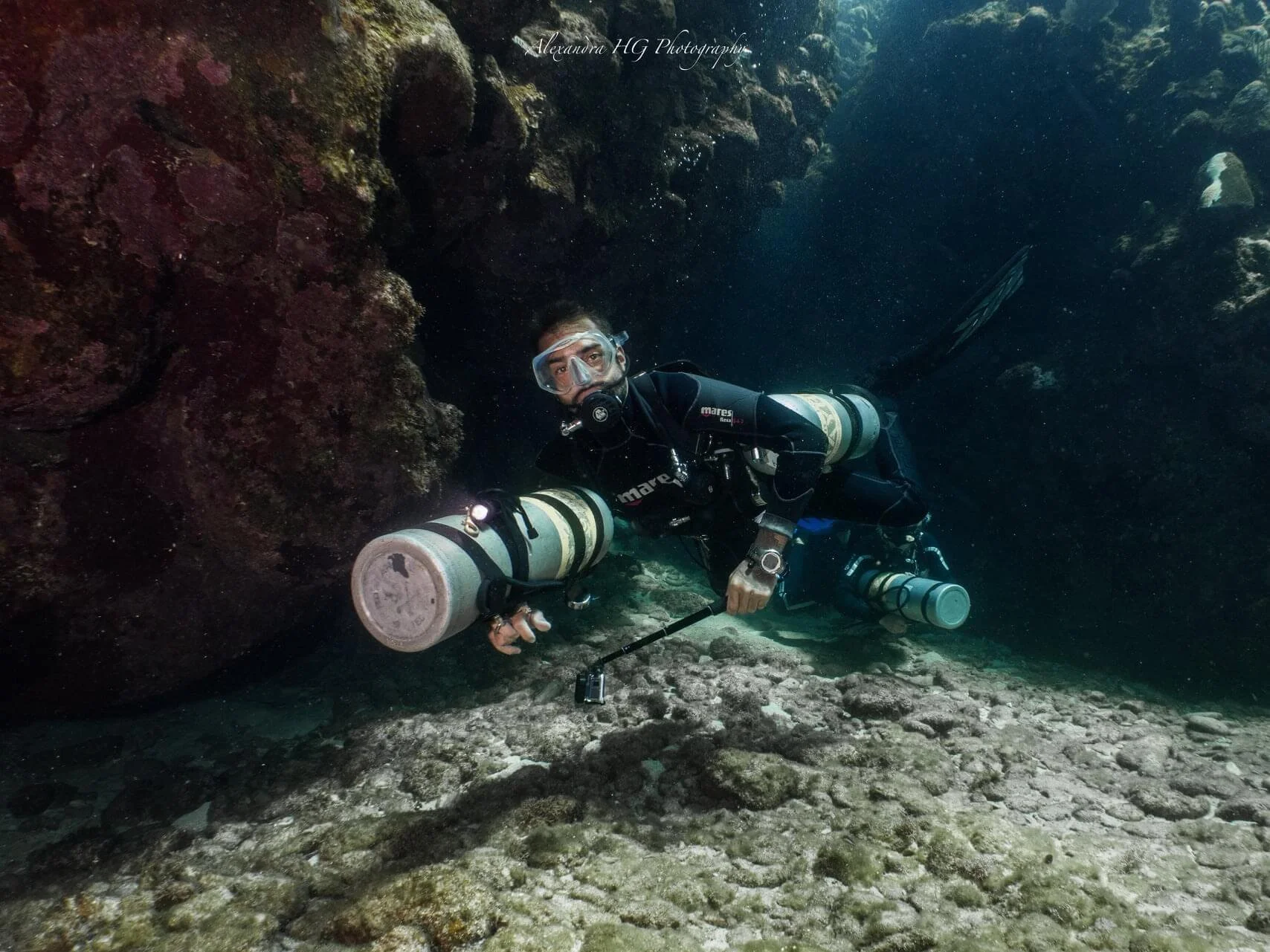
Sidemount Diver
A growing discipline — fewer instructors hold this rating, which can set you apart. Carries a $250 surcharge, and requires that you already hold the Sidemount Diver certification. We run that course for $400 if you do not.
Drift Diver
Good conditions for drift diving in the Bay Islands — a popular course to teach at warmer-water destinations worldwide.
Boat Diver
All diving at Coconut Tree Divers is boat diving — you will teach this course in exactly the environment you know best.
Underwater Naturalist
A natural companion to Fish ID — broadens your teaching to the reef ecosystem as a whole rather than species identification alone.
Videographer
The video companion to Photography — demand for underwater video content continues to grow, and few instructors teach it.
Self-Reliant Diver
Develops genuine independence and situational awareness — a personally valuable rating as well as a teachable one.
Gas Blender
Technical knowledge of gas blending for Nitrox and oxygen-enriched mixtures — useful if you plan to work in a technical diving environment.
Wreck Diver
Roatan has accessible wrecks — and wreck diving is a popular draw at dive destinations around the world. Carries a $100 surcharge.
DSMB Diver
SMB deployment is standard practice on Roatan boat dives — a genuinely practical specialty to teach, and one every working instructor benefits from knowing well.
Dive Against Debris
A PADI AWARE specialty focused on underwater debris surveys and removal. Combines environmental action with structured diving — well suited to Roatan's reef conservation ethos.
Frequently asked questions
What are the PADI Master Scuba Diver Trainer (MSDT) requirements?
Two things: five PADI specialty instructor certifications — not counting Peak Performance Buoyancy, Project AWARE and AWARE Coral Reef Conservation, which all instructors receive automatically — and 25 certified student divers across any combination of PADI courses. Both must be met before you can apply for Master Scuba Diver Trainer status through PADI.
Do I already have specialty instructor ratings after my Go Pro Caribbean IDC?
Yes. Every Go Pro Caribbean IDC includes Enriched Air (Nitrox) Instructor and Emergency Oxygen Provider Instructor training as part of the programme. Those two count toward the five ratings MSDT requires, and this programme covers the three you still need. Because all five applications are filed together on one combined form, PADI charges $384 for the set rather than a separate fee for each rating.
What can I teach with the Enriched Air and Emergency Oxygen Provider instructor ratings?
Enriched Air Diver Instructor lets you teach the PADI Enriched Air Diver course, the most popular specialty in diving, on planning and making dives with nitrox. Emergency Oxygen Provider Instructor lets you teach the PADI Emergency Oxygen Provider course, on recognising decompression-related illness and giving emergency oxygen, to non-divers as well as divers.
When does the MSDT Prep Programme run?
Immediately after your Instructor Examination, while you wait for your PADI instructor number to process. That is the only time it is offered. The programme runs on the back of your Go Pro Caribbean IDC — it is not a course you can come back for months or years later. If you think you want the specialty ratings, tell Will before you book so they are scheduled alongside your IDC.
Which specialties are best to do in Roatan?
Roatan is particularly well suited to Deep, Night, Underwater Photography and Fish Identification — the clear water, excellent visibility and rich marine biodiversity make these courses genuinely outstanding here. Navigation and Search and Recovery are also worth considering: both complement the skills you teach during Divemaster training, and both are practical ratings that hold their value wherever you end up working.
How much does the MSDT Prep Programme cost?
The Go Pro Caribbean fee for three specialty instructor courses is $325. PADI charges $384 for the five specialty instructor applications, filed together on one combined form — that certifies the three ratings you train for here alongside the Nitrox and Oxygen Provider ratings from your IDC. The total is $709 all-in for five specialty instructor ratings. Wreck carries a $100 surcharge and Sidemount $250; Sidemount also requires the Sidemount Diver certification, which we run for $400.
Do I need to be an MSDT to get a job as a diving instructor?
Not as much as many people suggest. When we look at hiring instructors at Coconut Tree Divers, certification level sits low on the list of what matters. What counts more: how you got your certifications, your experience outside the dive industry, the languages you speak, and who you are as a person. We never hire over the internet — only in person. An OWSI who shows up at a dive centre is more likely to get a job than an MSDT who applies remotely. Become a specialty instructor because you want to teach those courses, not because someone told you it would improve your prospects.

The next step — when you're ready for it

Get the specialty ratings in place — then go earn the 25 certs
This programme gives you three specialty instructor ratings, chosen from 16 courses available in Roatan. The 25 certified divers — the other requirement for MSDT — come from working as an instructor. This is where you build the qualifications. The experience follows from the job. After MSDT, the IDC Staff Instructor course takes you to the next rating.