
Coconut Tree Divers
Welcome
Four decades on Half Moon Bay
Coconut Tree Divers has been operating on the same stretch of Half Moon Bay sand for four decades. The shop opened originally as Bottom Time Divers in 1990 and rebranded to Coconut Tree Divers in the years since. Same beach. Same kind of operation. Small boats, small groups, big reef.
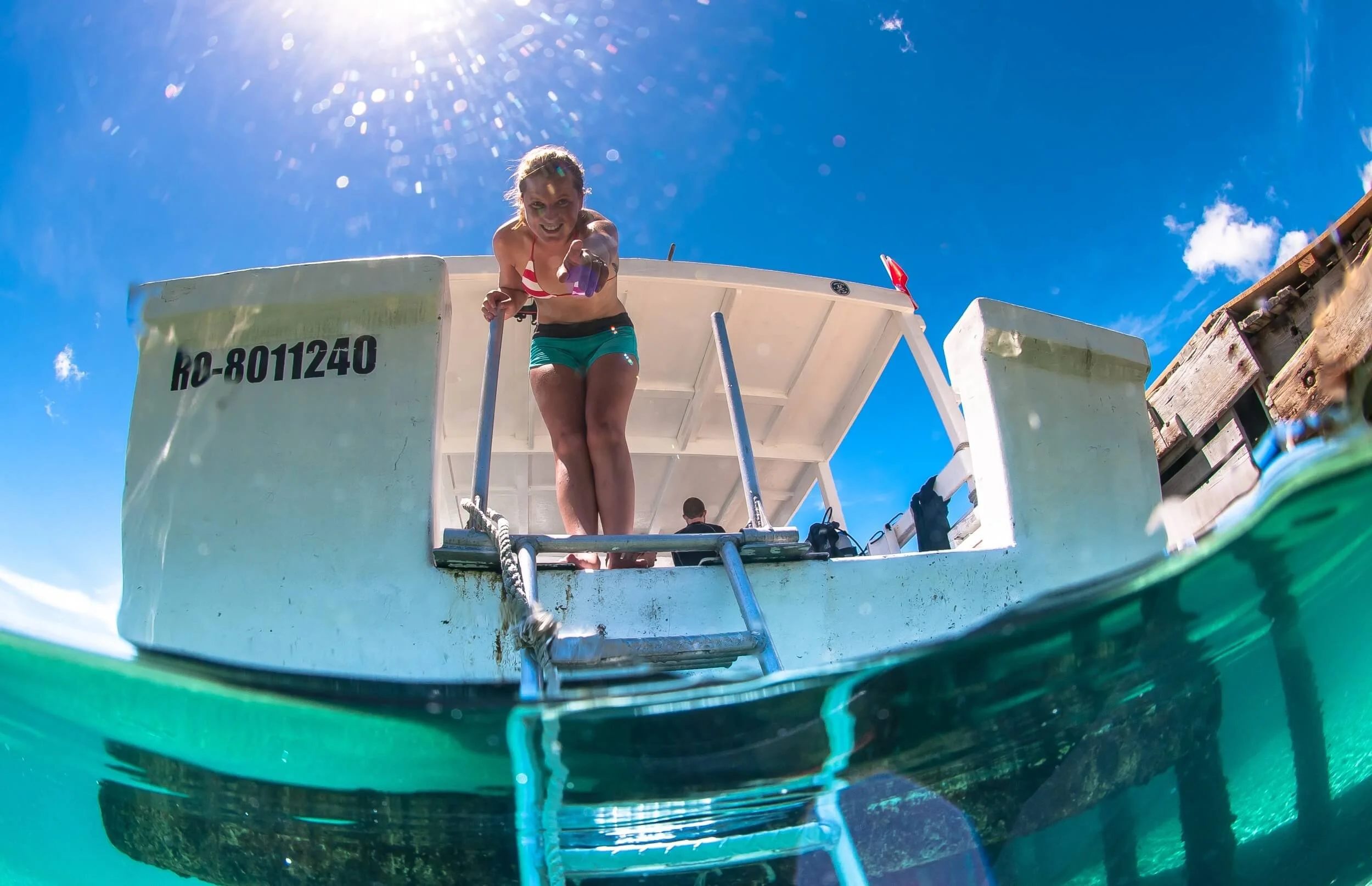
It's a PADI 5-Star Dive Centre and the only dive shop in Half Moon Bay with its own dock — a detail that sounds minor until you've watched divers at other shops wade chest-deep in full gear to reach a moored boat. Here, you walk down to the boat dry and you walk back up dry. Gear and cameras stay on the dock.
The Mesoamerican Barrier Reef — second only to Australia's Great Barrier in size — runs directly past the shop. The wall starts about fifty metres off the beach, drops past 12 metres at the first ledge, and continues past 300 metres within a few fin kicks. Mooring buoys are on the wall within five minutes of leaving the dock.
Beyond the house wall, the shop accesses more than fifty named dive sites. Most are within thirty minutes of the dock; a handful are worth a two-hour run for the right group. The site picked each morning depends on conditions, who's on board, and what the reef has been doing that week.
For Go Pro Caribbean candidates, this geography matters more than it first appears. The Divemaster internship and Instructor Development Course both run from this dive shop, on this wall, every day. Six weeks of Divemaster training, twelve days of IDC, the Instructor Examination after that — every dive is a five-minute commute from the dock. Training infrastructure and working infrastructure are the same infrastructure: candidates who continue on as staff after their certification keep the same routine.
From above
The wall runs parallel to the shore
Fifty metres off the beach. Five minutes from the dock. The Mesoamerican Barrier Reef.
Daily operation
Three boats. Fifty-plus sites.
Coconut Tree Divers runs three boat departures every day — a morning two-tank trip and two afternoon single-tank trips — plus night dives on Tuesdays and Thursdays (subject to a minimum of four divers booked). The crew picks each morning's site based on conditions, who's on board, and what the reef has been doing that week.
Water temperature stays between 27 and 30°C year-round. Visibility on the West End reefs typically runs 20 to 30 metres. There's no current to speak of in the protected zone of the Roatán Marine Park. Every dive is essentially a wall dive with a shallow reef-top return — descending past sea fans, sponges and tube corals, then drifting back over the top of the reef on the way home.
The dive shop sits inside the Roatán Marine Park, where reef-fee funded patrols keep the marine reserve protected. Line fishing is prohibited; spear-fishing is permitted only for invasive lion fish, with a Marine Park licence. Turtle and eagle ray sightings are common; spotted eagle ray season runs December through April. Whale shark and dolphin encounters are rarer but happen most months.
The team on the dock is genuinely multinational. English, Spanish and French instruction are all available, delivered by staff who actually live in each of those languages. For Divemaster interns and IDC candidates whose first language isn't English, the bilingual presence on staff makes a real difference during the harder theory sessions.
On every boat that leaves the dock
- Emergency oxygen and comprehensive first aid kit
- VHF radio, mobile phone and fire extinguishers
- Complete dive roster and surface check-in on every dive
- Two life rings and rescue equipment
- Spare equipment bag — fin straps, mask straps, backup regulator
- Chilled fresh drinking water on every trip
Not just what the regulations require — what four decades of running these reefs has refined down to what you actually want on hand.
Reef life
Wall encounters most divers don't expect
Turtles, eagle rays, the occasional whale shark — on a wall five minutes from the beach.
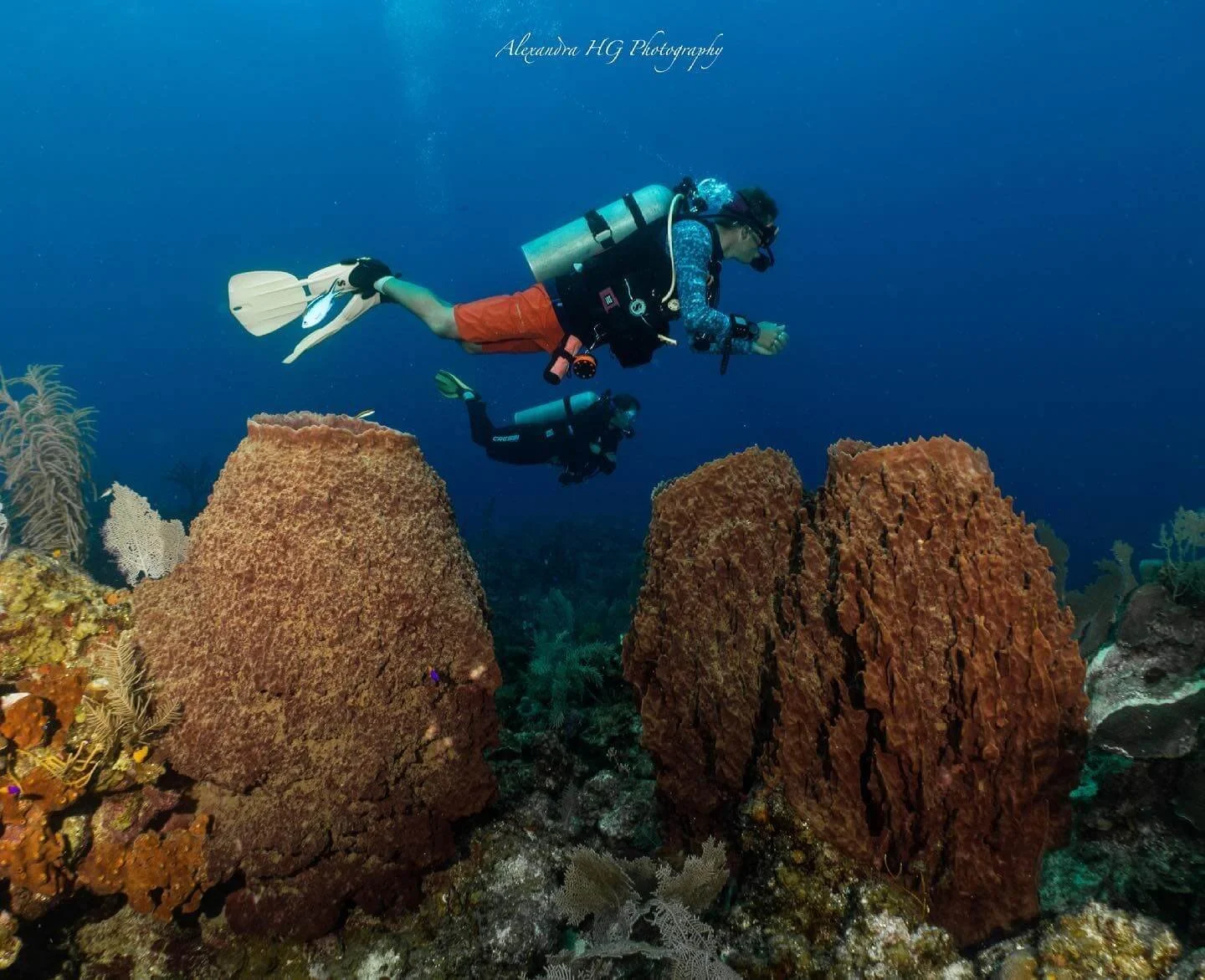
Recreational Diving
Try-dives, courses & daily fun diving
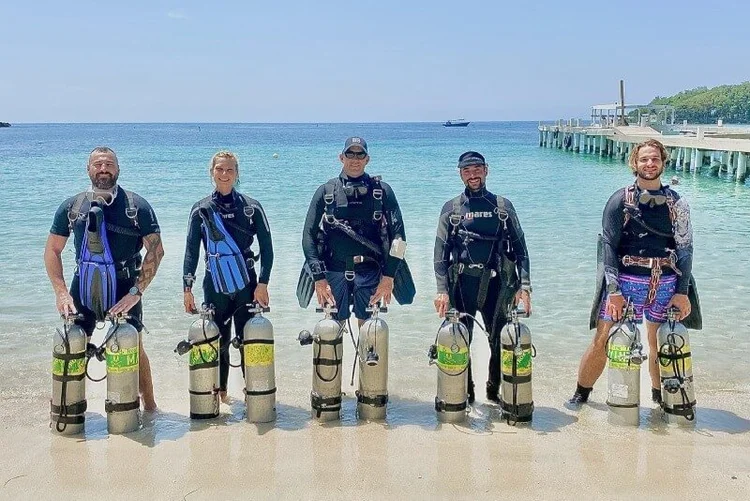
Technical Diving
Roatan's only dedicated tec centre
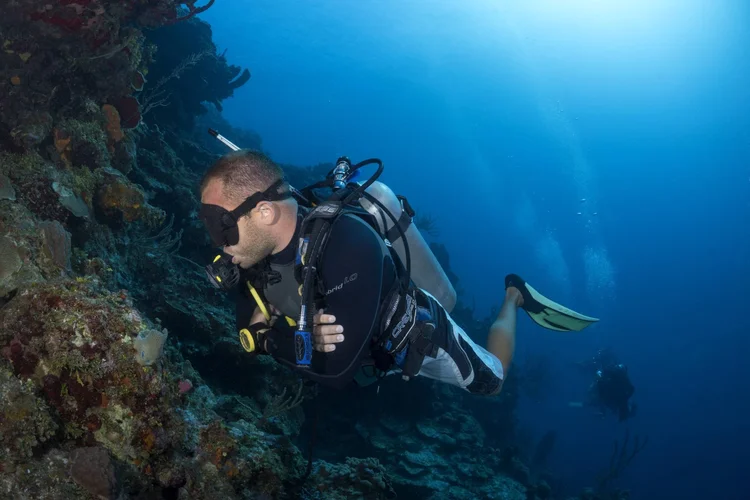
Go Pro
Train to work in diving — DM, IDC & beyond
Technical diving
The technical side
Coconut Tree Divers is Roatán's only dedicated technical dive centre. Inside the shop sits the Roatán Tec Team — led by Monty Graham, a technical instructor with 23 years of experience in technical and commercial diving.
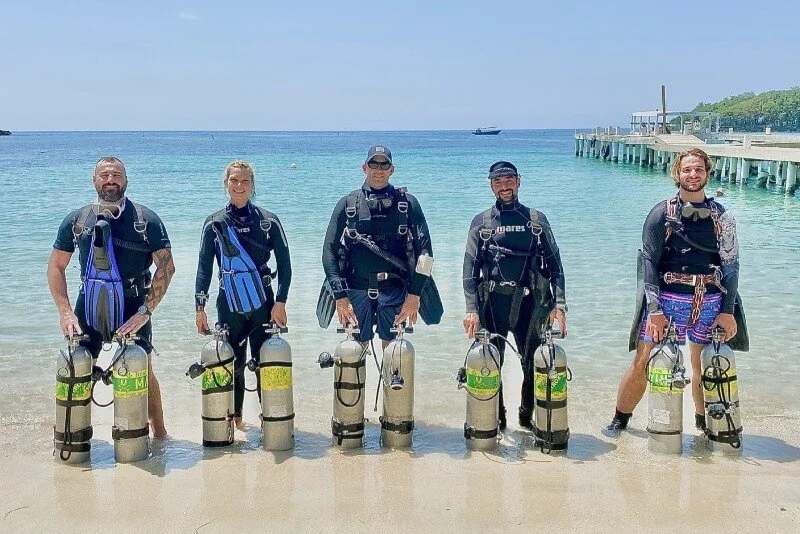
The Tec Team's pathway runs from a diver's first steps into the technical world — staged decompression, sidemount, twinset configuration — through to full Trimix. Equipment hire is available on site for divers who haven't yet invested in their own kit. The Tec Team operates a full classroom and gas-blending station on the Coconut Tree Divers premises.
For Go Pro Caribbean candidates, the Tec Team's presence has practical consequences. Divemaster interns dive alongside Tec divers on the daily boat schedule and see a different kind of dive being prepared — different planning, different gear configurations, different operational discipline. IDC candidates learn to teach PADI standards in an environment where the boat next door is shaking out a Trimix dive at 80 metres. Exposure to technical-diving culture broadens the perspective; it's a depth of professional context most IDC programmes don't offer.
For technical-diving enquiries specifically, contact the Tec Team directly via roatanteccenter.com or WhatsApp Monty on +504 9541 0711. For Coconut Tree Divers' recreational and Go Pro Caribbean enquiries, the shop's contact details are at the bottom of this page.
Where pros train
Home of Go Pro Caribbean
PADI 5-Star IDC · 100% IE pass rate (last 10 years) · Max six per cohort.
Professional training
The Go Pro home
Coconut Tree Divers is the home of Go Pro Caribbean — the professional training operation run by PADI Platinum Course Director Will Welbourn from these same premises. Twenty-three years on Roatán; more than 500 instructors certified.
- 5-StarPADI IDC Centre designation
- 100%IE pass rate, last ten years
- Max 6candidates per IDC cohort
- $5/nighton-site accommodation
IDCs run monthly throughout the year. The candidate cap is set at six, not on a sliding scale — it's locked into how the programme works. On-site accommodation in a 13-bedroom house with its own pool, four minutes' walk from the dive shop, is available throughout the duration of training.
Three commercial pages support the professional training tracks:
The Course Director side of Go Pro Caribbean — Will's twenty years of running IDCs, the Ernst & Young-to-diving career pivot, the teaching philosophy that produced the IE track record — is covered on its own page.
Around the shop
What a week with us looks like
Scroll through. Click any image to enlarge; in the lightbox, use the arrows, swipe on mobile, or press the arrow keys.
Where to start
From your first breath to working in diving
Five entry points. Tap any card for the detail; each card routes onward to the dedicated course page.
Get in touch
Train here. Dive here.
Coconut Tree Divers wears two hats — the daily operating environment for Go Pro Caribbean's professional training, and a working dive shop serving visitors and certified recreational divers. For each, there's a different route.
Train here
Pro pathway with Go Pro Caribbean — Divemaster, IDC, and on-site accommodation.
More about Will Welbourn and the IDC philosophy on the About page.
Dive here
Fun dives, recreational courses, daily boat schedule — contact the shop directly.
coconutdiveshop@gmail.comOr stop by for a chat and a look at the reef map.