
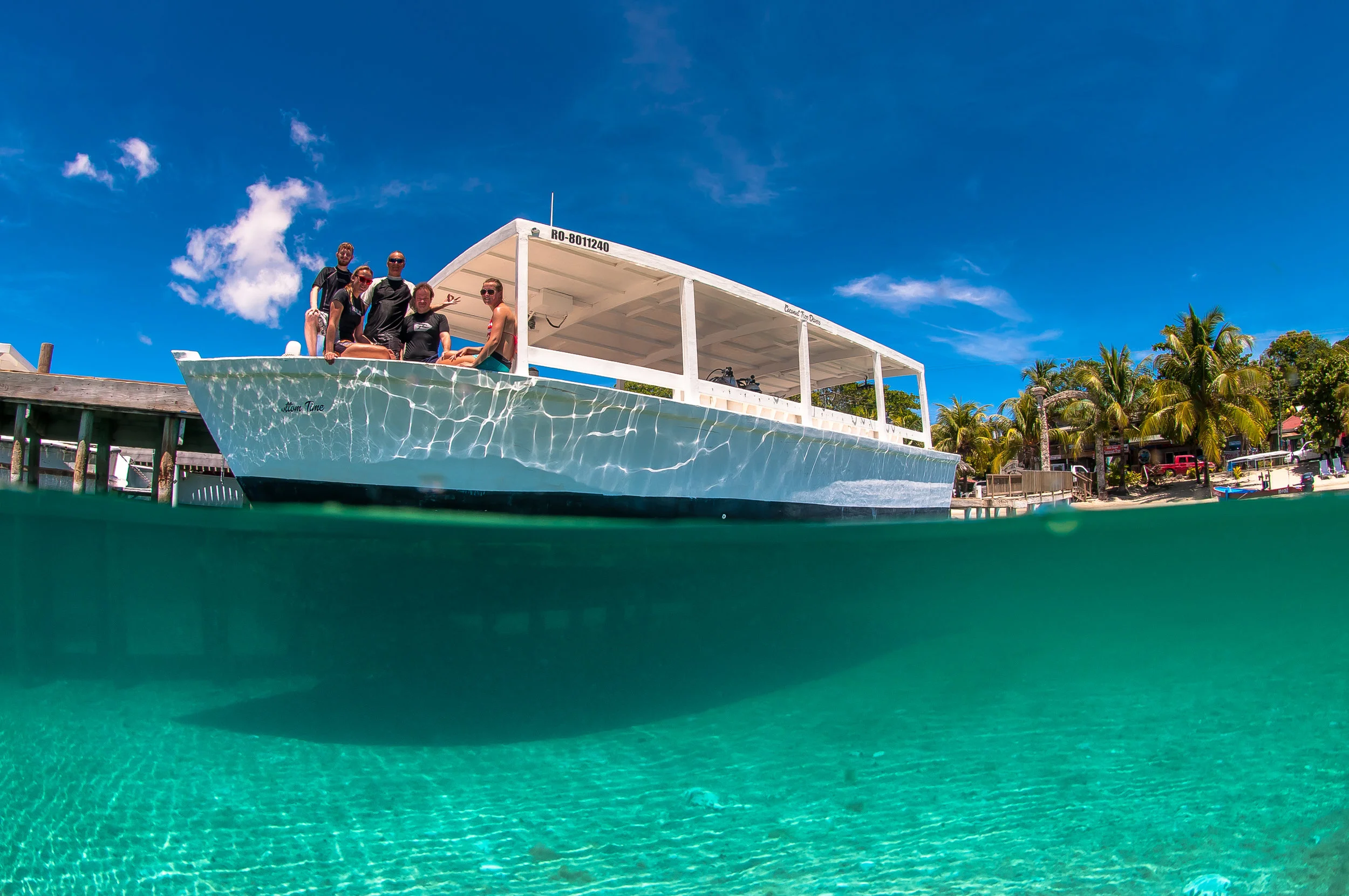
Our Blog, Whats been happening at Coconut Tree Divers.
From Desk Job to Dive Pro: My Journey to Becoming a Course Director
If you’re considering a pivotal adventure and a career that’s as rewarding just as it is exciting, my story might strike a chord with you. Like many, my path to becoming a Divemaster and Instructor wasn’t straightforward—but it changed my life in ways I would never have imagined.
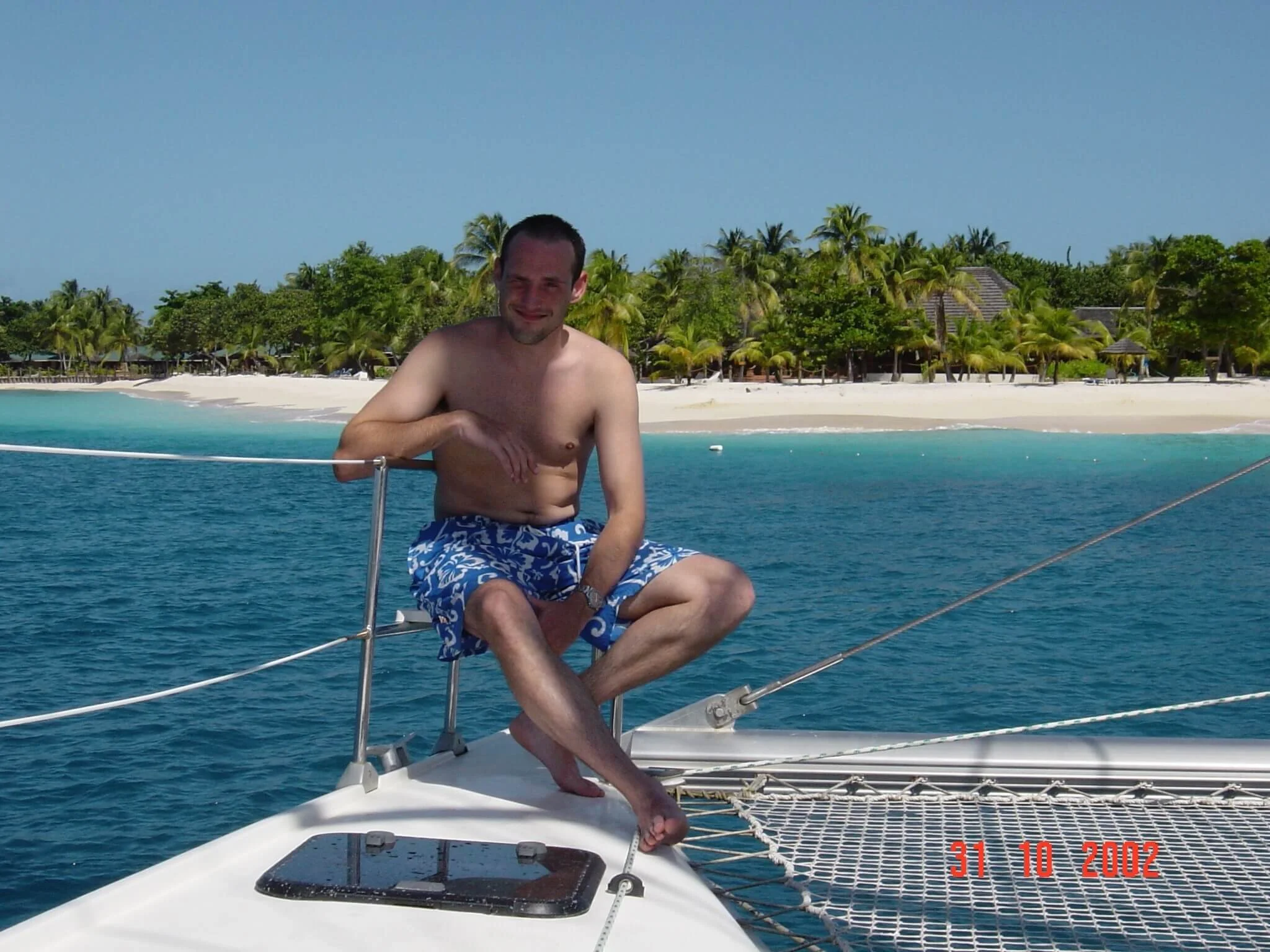
Before I found my true calling underwater, I worked in a variety of jobs. My first job was at McDonald's (it was short-lived). I moved to bar work in an English Village pub, enjoying the fast pace and constant interaction. Later, I sold cell phones at Carphone Warehouse and excelled at helping people choose the right tech. Even as an auditor, I was drawn to the social side of the job whenever the opportunity arose, such as getting involved in new graduate induction and training.
But everything changed when I became a project accountant in the insurance industry. Suddenly, I was bound to a desk, day in and day out. Long hours surrounded by clock-watchers, I struggled with imposter syndrome as I tried to keep up with the complex work. I realized I needed more than just a paycheck—I needed meaning and belonging.
That’s when I decided to travel, planning an overland trip from Panama City to Mexico. Fate had other plans: I made it as far as Roatan, fell in love with the island, and knew I had to stay. In Roatan, there was one thing everyone did—scuba diving.
I already had my Advanced Open Water certification from a gap year adventure, so I jumped right into the Rescue and Divemaster courses. I loved every moment. With my RYA Yacht Skipper’s certification, I quickly found work guiding divers around Roatan’s spectacular reefs.
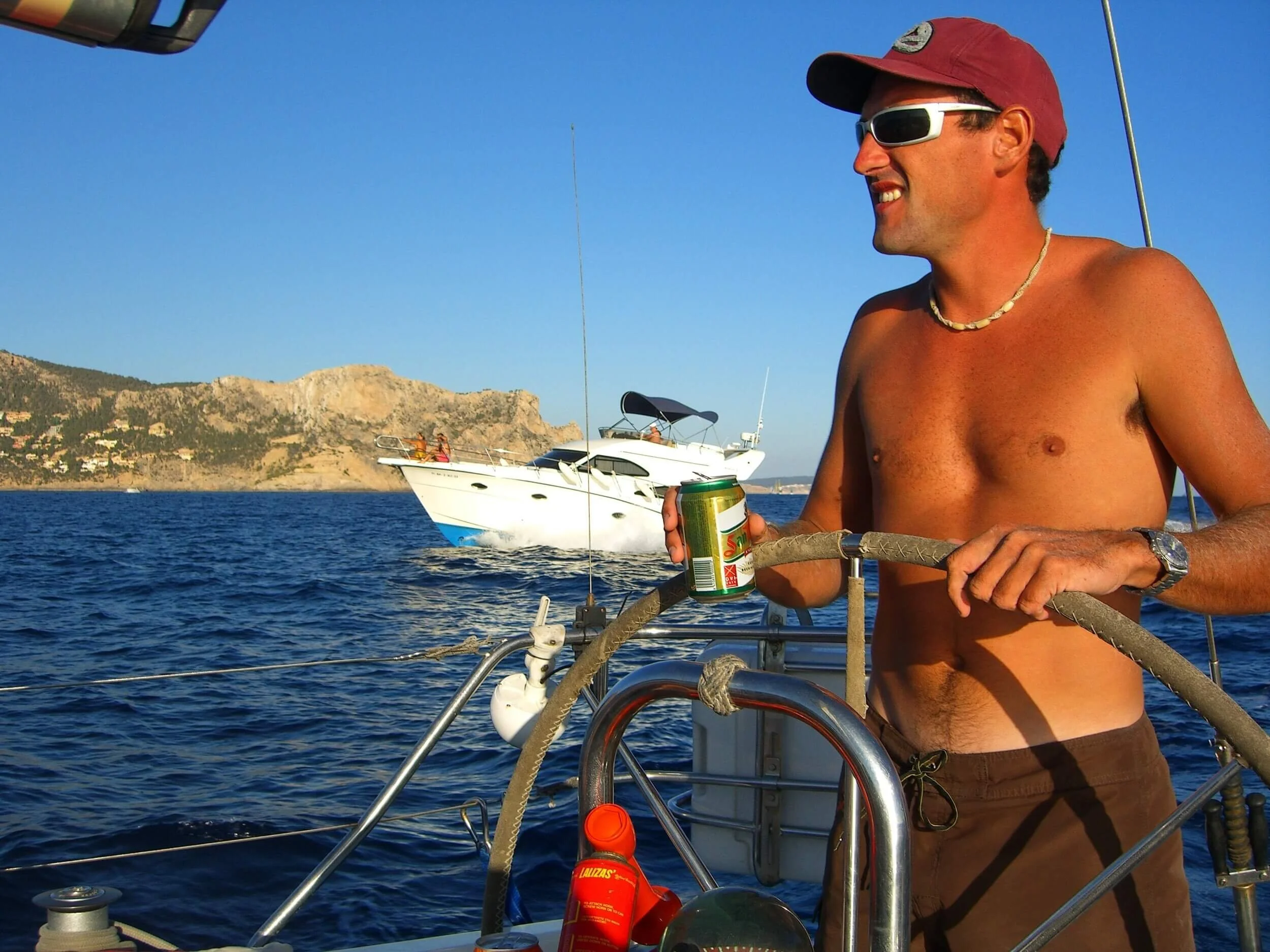
A few months later, I completed my Instructor Development Course with the legendary (and much-missed) Andy Phillips. Soon after, I landed a dream job with Odyssey Expeditions as a yacht captain and scuba instructor—a role that let me combine my love for the sea with my newfound passion for teaching.
But Roatan kept calling me home. I returned to Coconut Tree Divers, attracted by the friendly team, the prime location, and—most of all—the unique style of boats. I loved them: big, slow, and heavy. If you want a stable platform and a slow ride to the dive site that turns the journey into a social occasion, not a feat of endurance being pounded by waves at high speed, then these were the best boats. It was an ocean away from my old desk job (pun intended). At Coconut Tree, I certainly didn’t feel like an imposter. It was socializing every day, I was learning and teaching. Girls seemed to be more interested in me than they ever were when I was an accountant. Maybe losing the desk flab and building muscle carrying tanks, along with a mahogany tan, helped. But I think my only personal feeling of self-worth was the main thing. Every day was social, active, and full of learning and teaching. I gained confidence, built friendships, and attained a sense of self-worth I’d never found in the corporate world.
This journey—from the office to the ocean—taught me that contentment comes from following your passion.
Are you ready to start your own adventure? Whether you’re looking for a career change, a gap year experience, or a way to turn your love for diving into a profession, Divemaster and Instructor training can unlock opportunities you never knew existed. Take the plunge—your dream career might be waiting under the surface.
Want to know more?
Where would you like to go?
Packages & Pricing
See packages by your starting cert level
Divemaster Training
Internship, requirements & packages
Instructor Training
IDC, the IE, dates, prerequisites & cost
Roatan
Accommodation, flights, geography & cost
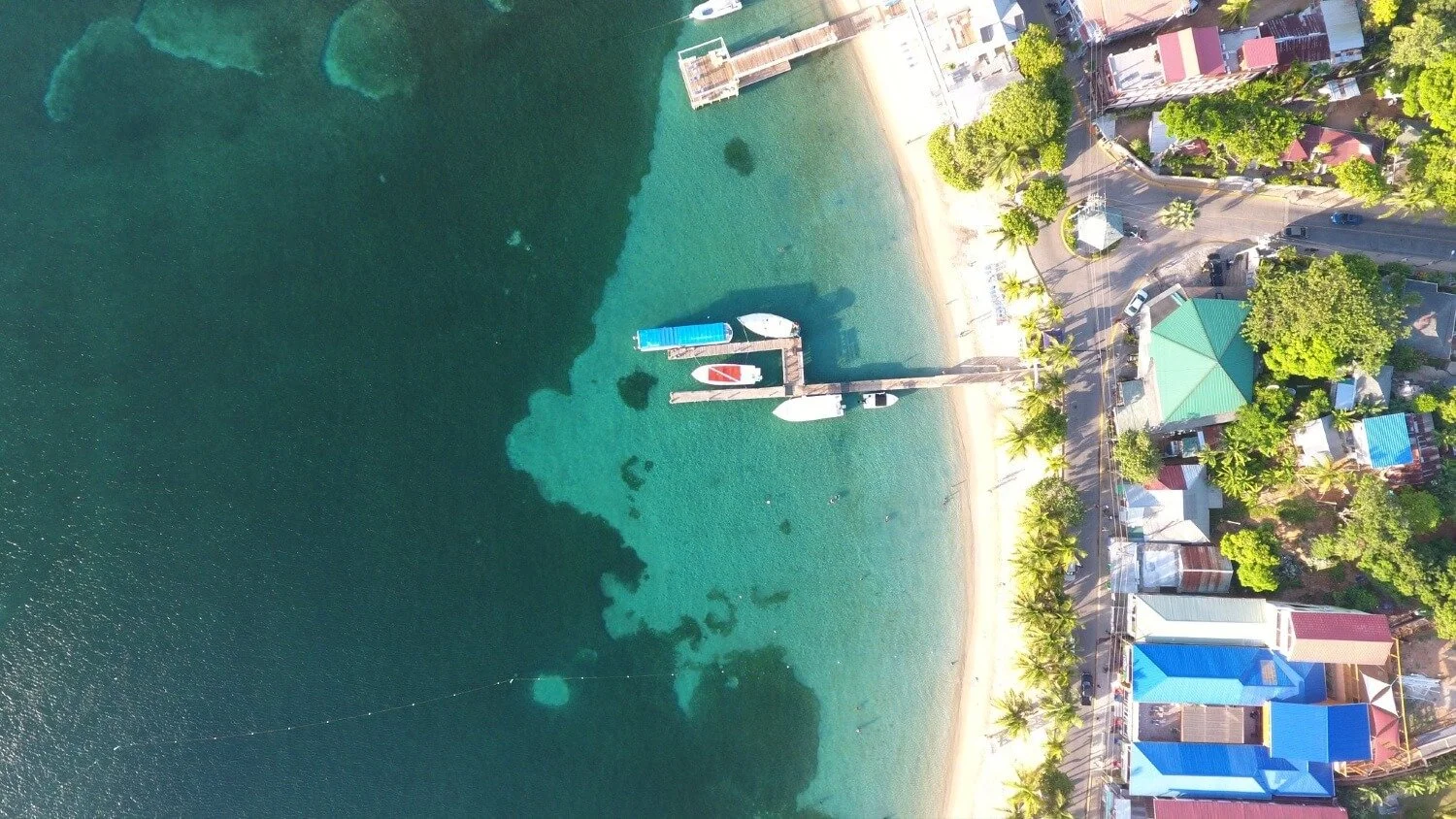
Utila divemaster internship or Roatan divemaster internship?
When deciding where in the Bay Islands to do your divemaster internship, you should carefully weigh the pros and cons….
When comparing Roatan and Utila to do a Divemaster course or the IDC, Utila has been long established as the place to go. Does it still deserve to be considered that way? In this first of a series of blog posts, I am going to take a look at deciding between these two islands because it SHOULD be a decision; if you have decided on Honduras for your training, you need to look carefully at both these islands and decide which one is the best fit for you.

West Bay Roatan

Half Moon Bay, Roatan, West End
The quality of training you will receive in both locations is exceptionally high.
If I had to answer this question immediately in just a few words, it would be:

Roatan's abundant marine life, you see a turtle more often than not
Choose Roatan if you want to spend time on an island with more diverse marine life, better visibility (especially in the rainy season), abundant above-water activities, better medical facilities, more accessible travel connections (Utila’s airport is currently closed to commercial flights), and many more beaches.
Choose Utila if you need late-night nightlife and raucous bars/clubs or if living in a dorm room to keep costs down is acceptable.
I believe there is a myth based on outdated information that needs to be debunked. Utila is NOT the only option or necessarily the best place in the Bay Islands to become a PADI pro; many people will find Roatan a better fit for them.
When backpacking through Central America in 2003, I had to choose between Roatan and Utila. I looked at both places and concluded that Roatan was a series of beachfront communities with an excellent degree of variety. Utila is a one-town island on a bay with a tiny sliver of beach (Chepes Beach). Utila's best beach, Bandos, is private; you must pay to enter. Compared with Roatan, the main tourist areas are West End and West Bay, nestled on the stunning beaches. In addition, Roatan offers the ability to rent a scooter or car and explore the large island with its many beaches, secluded coves, snorkeling spots, golf courses, and other non-dive-related activities. That was why I chose Roatan as my first stop before visiting Utila for a much shorter time.

Bando Beach Utila

Chepes Beach Utila
The vast majority of people will only visit one island or the other and become die-hard fans of the one that they chose and visited, swearing blind that their decision was the right one. After all, that's human nature. Convince yourself and let your peers convince you it was the right decision. I have spent time on both islands. I did my Divemaster training on Roatan, and my instructor, technical instructor, and IDC staff training were in Utila. I had the choice between Utila and Roatan when I first came here and have had the choice to move islands ever since. It is an informed choice, and hands down, my choice is Roatan. You can find some balanced blog posts about both islands, such as this one.
Why has Utila established its reputation?
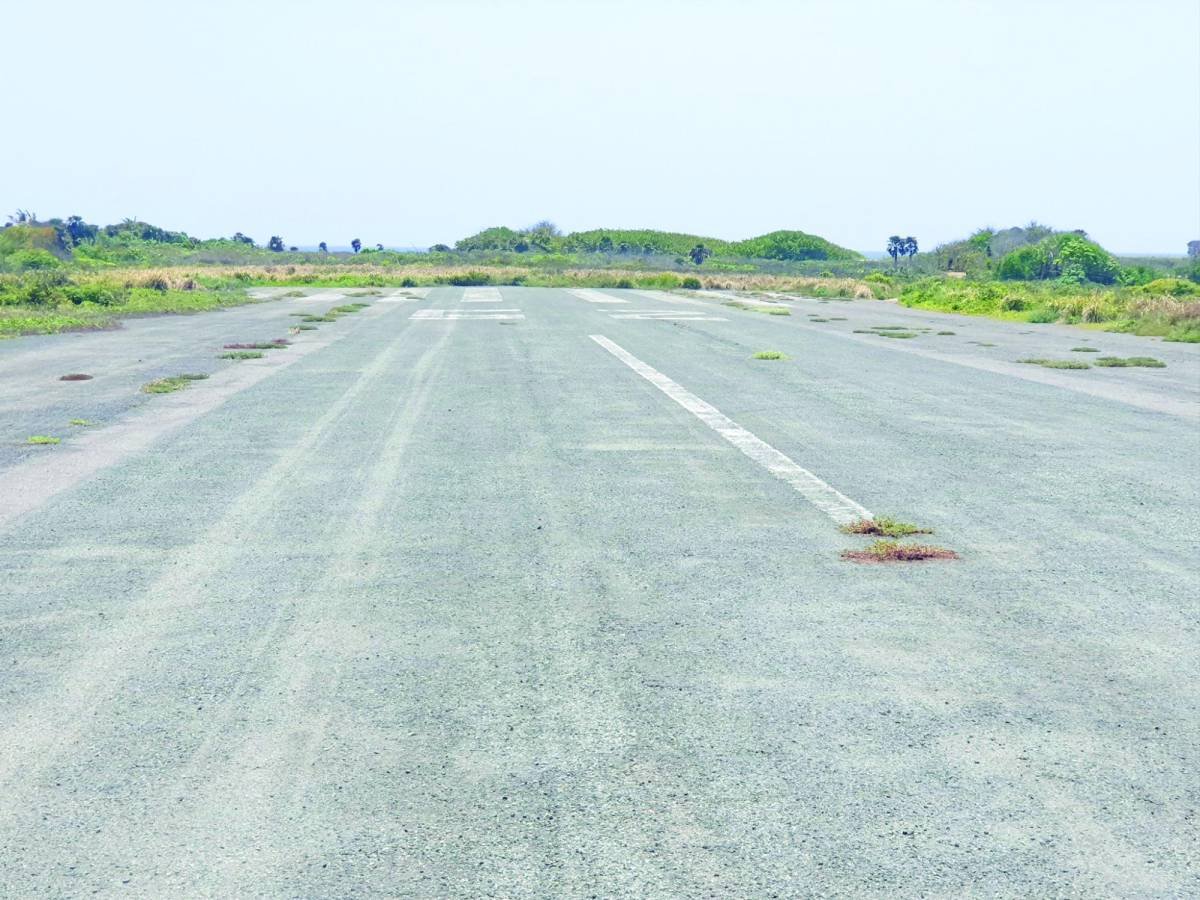
Utila’s runway is currently unsafe for commercial flight operations
In my opinion, there are two reasons for this:
Utila used to be significantly cheaper in terms of the cost of living and the price charged for scuba courses. (this is no longer the case)
It was the first of the two islands to have multiple course directors and IDC centers offering instructor development courses. (Roatan had a course director before Utila, but only briefly.) The legendary Andy Phillips (RIP), with whom I did much of my professional training, was the person who put Utila on the map for Instructor and Divemaster training.
Utila's inertia based on these two things has been maintained despite the fact that neither of these competitive advantages still exists. Utila's popularity is based on outdated information. Don't get me wrong; there are compelling reasons to choose Utila, but they are less compelling than they once were when comparing the two islands.
Cost
Things have changed, and the cost differences between the two islands are now marginal. Spending an extended time doing a divemaster internship costs the same on both islands. Some things are cheaper when looking at one island, and some are cheaper when looking at the other. In further posts, I will look at this in more detail. As of now, I suggest looking at everything when comparing prices:

Runoff from the mainland rivers affects Utila more than Roatan
Quality of diving (Roatan wins). Utila's proximity to the mainland means it receives a significant amount more sediment runoff, which affects visibility and the abundance of marine life. I am fascinated by how excited people who have spent most of their time diving in Utila get when seeing turtles and rays, which we see daily and take for granted. To get the best diving Utila offers, you must get up early for the comparatively long boat trips to North Shore sites.
The cost of traveling to each island, including hotel stays, if you cannot make the entire trip in one day due to poor connectivity of flights or other modes of transport. (Roatan Wins)
The cost of food and drink in restaurants and bars. (Utila wins)
The cost and availability of produce to cook your meals (Roatan wins)
The cost of the training (the same in both at the divemaster and instructor level) is based on published course prices. Please get in touch with me if you have been offered a lower course price than my published prices. I will consider price matching if I believe the quote you are getting is for a comparable quality of training experience and other factors.
Accommodation (Is the same when considering a 2-month stay; for one to two-week stays, Utila is still cheaper)

Seven different airlines fly to Roatan
90% of people who do their Instructor Development Course in Honduras do it in Utila. That alone should be a reason to do it in Roatan if you are looking for employment or MSDT internship opportunities after IDC. It is a competitive market, and choosing to train on an island (Roatan) where you will compete against fewer people for post-instructor exam work is a smart move.
In summary, I am not knocking Utila. I love visiting the place for a quick weekend getaway. However, there is a lot of misinformation on the web suggesting that Utila is the superior and cheaper place to become a PADI instructor or divemaster. I am comparing what the two islands offer to someone planning to spend 6-12 weeks doing a Divemaster and Instructor internship.

How to prepare for your PADI Instructor Development Course
The PADI instructor development course can either be a hugely fun and rewarding learning experience or it can be a very stressful one. Which of the two experiences you will have depends entirely on your preparation level and the length of the IDC course you choose.
This blog post is mainly aimed at discussing preparation for the IDC. However, step one of the preparation is choosing the right course. If the course is not spread over at least 14 days, it's going to be stressful, so choose wisely.
Now for what you can do in the weeks or months before the course to ensure you get the most out of it.
Doing your IDC immediately after your DM is the best thing. Your knowledge will be fresh and your dive skills practiced. Regardless of whether you are doing the IDC immediately after you complete your DM or years after you have done your DM, here is some simple advice to help you start preparing.
Dive theory
First and most importantly dive theory. Over 75% of people who fail the PADI Instructor exam fail the dive theory written exams. This always surprises me because it is the single easiest thing to prepare for using independent learning materials before you even start your instructor development course.
You should arrive at your IDC expecting to sit a practice dive theory exam on day one. You should also arrive expecting to pass that exam. The candidates I teach who appear stressed throughout the course are the ones that did not study dive theory before the course started. There are plenty of websites and tutorial videos on YouTube that will help you arrive fully prepared. During the IDC itself, you want to be able to spend the evenings doing the homework that has been assigned that day. This will include classroom, confined water, and open water teaching presentations. If you do not spend time on these, you will perform badly the next day. If you have to study dive theory at night as well as doing your homework, you will not have the time needed to prepare, you will be tired and stressed and your overall performance the next day will reflect that.
Many people think that the dive theory will be taught as part of the IDC, and in most cases, it will be. However, dive theory sections are made optional in my IDC. They are always the last session if the day. This allows those that have studied in advance to spend their evenings on more important things, like getting a good meal, doing their homework and getting a good night’s rest. Maybe even doing a relaxing night dive.
So the most important thing you need to do to prepare for your instructor development course is do practice dive theory quizzes. If you do ALL the practice quizzes on my website and can get 100% easily, you are looking good!
Dive Skills
To become a PADI Divemaster, you would have had to demonstrate 24 basic scuba skills. By demonstrating I mean perform them so that a student diver who has never attempted the skill themselves could easily replicate what you have done.
Get your instructor manual out and look at the list of 24 skills. (Its in the DM part of your maual).
Think about each skill and how you would verbally describe the steps involved in performing the skill. Then once you have a list of steps, think about how you will exaggerate those steps when you are performing them in the demonstration. It’s a great idea to watch videos of people demonstrating the skills to get ideas.
Try to actually practice them in the four weeks before the IDC start date if at all possible.
Instructor Manual Familiarization
Your PADI instructor manual actually has a section at the beginning on to use it. If you have read it yet; now would be a good time!
The instructor manual is obviously broken down into an instructor guide for all the PADI courses and programs, amongst a few other things. Each section regardless of what course or program it is addressing has the same basic layout.
Look through the manual and try to get more familiar with the layout. Here are some questions you can ask yourself as a starting point. Think about how you would anser each of these questions in just one sentence!
What do I find in Section 1 of the Instructor manual for any given PADI course?
What do I find in Section 2 of the Instructor manual for any given PADI course?
What do I find in Section 3 of the Instructor manual for any given PADI course?
What do I find in Section 4 of the Instructor manual for any given PADI course?
What is in the General Standards and Procedures, Training Standards section?
What is in the General Standards and Procedures, Paperwork section?
What is in the General Standards and Procedures, Key Standards section?
What is in the Professional membership guide?
PADI Course Familiarization
The final and possibly hardest thing to do is try to assist on one Open Water, one Advanced and one recue course as close to your IDC start date as possible. The more familiar you are with the courses and how experienced instructors teach them, the easier your IDC will be.
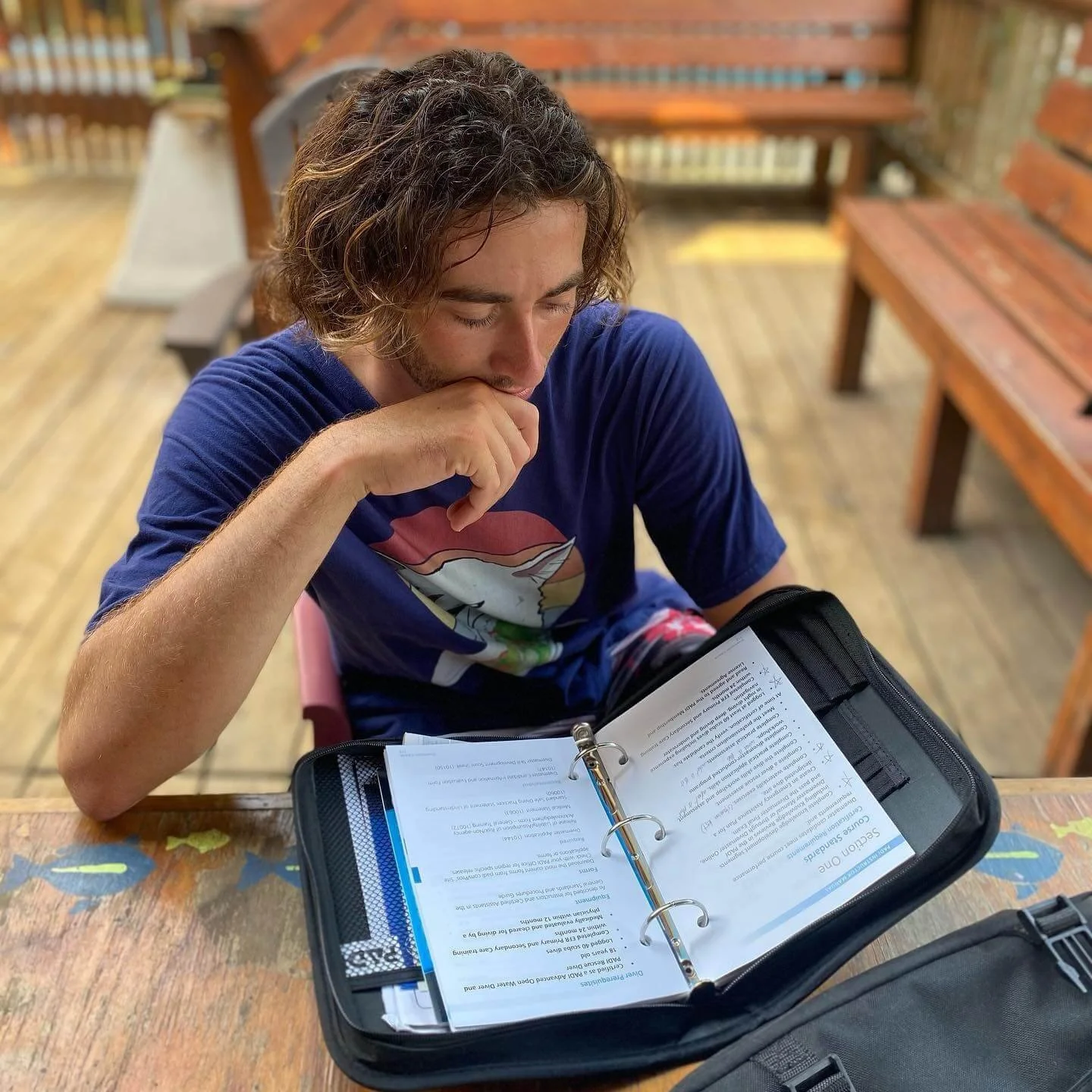
What to expect at the PADI instructor exam (IE)
The PADI instructor exam or IE is usually spread over 2days. In some locations which have a large number of candidates, it can turn into a marathon extending over three days. (Hint: avoid those locations!)
Many people say that IE stands for “It’s easy” which in all truth it should be if you picked the right IDC center and course director.
The exam is conducted by a PADI Instructor Examiner, the instructor exam schedule can be found here.
The IE is split into 4 components:
1. Written Exams
2. Classroom presentation
3. Confined water teaching
4. Open water teaching
Written Exams
The written exams are split into two sections:
1. Standards and Procedures – An open book exam with 50 multiple choice questions. You can use your instructor manual and guide to teaching to find the answers. You have 90 mins. The pass mark is 75%. It is a pass/fail exam. If you get below 75% you will have to return to a later IE to retake the whole written exams section. The fee to do so is approx $200.
2. Dive Theory – Has five sections. Physics, Physiology, Equipment, Skills and the environment and recreation dive planner. There are 12 multiple choice questions in each section, for a total of 60 questions. You have 90 mins. The pass mark is 75% IN EACH SECTION. If you get less than 75% in one of the five sections you will be allowed to retake that section later in the IE. If you fail in 2 or more sections, or you fail the retake, you will have to attend a later PADI Instructor Exam and repeat all written exams again. The fee to do so is approx $200. You are allowed to use a calculator the PADI RDP table and PADI ERDPml.
Classroom presentation
The classroom presentation is where you demonstrate your ability to use the PADI educational materials to assist students who are having trouble understanding a concept from the knowledge development portion of a PADI course. In short, explaining the answer to one question from a PADI knowledge review. It could be from the Open Water Diver course, Advanced Open Water Diver course, Rescue Diver course, Divemaster course, Peak Performance Buoyancy, Project AWARE or AWARE coral reef conservation specialty courses.
The presentation should be approximately 4-8 minutes long depending on the complexity of the question you have been assigned.
You will use PADI educational materials such as lesson guides and manuals in a classroom setting, your ‘students’ will be other IE candidates. One of the focuses is your ability to not only effectively use the PADI materials, but to interact with your students in a meaningful way by asking thought-provoking questions. You will also need to give real-life examples to aid their understanding of the given topic. In the IDC you are taught a fairly formulaic approach to help you score highly in this section.
To pass you need to score approximately 70% of the available points. If you do not pass with your first presentation you are allowed a second attempt with a different question.
Confined Water Teaching Presentation
The confined water section of the exam involves two things:
1. Teaching one skill from a PADI course. It could be from the Open Water Diver course, Advanced Open Water Diver course, Rescue Diver course or Peak Performance Buoyancy specialty. You will brief and then demonstrate the skill. You will then have 2-3 ‘students’ (other IE candidates) perform the skill for you. They will be assigned deliberate errors to make by the examiner. It is your job to identify and correct these errors. You then debrief. To pass you need to score a 3.4 (approx 68% of available marks) during the IDC you will become very familiar with the scoring system and the format you need to use to teach in confined water effectively.
2. Demonstration quality skills. You will be asked to demonstrate 5 basic scuba skills. The five skills will be randomly selected from the 20 basic scuba skills. They can all be seen demonstrated on my Youtube Channel. Cesa is guaranteed to be one of them.
Open Water Teaching Presentation
The open water section of the exam involves two things:
1. Teaching two skills from a PADI course. It could be from the Open Water Diver course, Advanced Open Water Diver course, Rescue Diver course or Peak Performance Buoyancy specialty. You will brief the skills and then have 2-3 ‘students’ (other IE candidates) perform the skills for you. They will be assigned deliberate errors to make by the examiner. It is your job to identify and correct these errors. You then debrief. To pass you need to score an average of 3.4 (approx 68% of available marks) during the IDC you will become very familiar with the scoring system and the format you need to use to teach in open water effectively.
2. A rescue demonstration. You will demonstrate rescue exercise 7 as though teaching it to rescue diver students. This means doing it slowly and clearly. You will be assigned to either do it using the mouth to mouth method or the mouth to pocket mask method.
If you choose the right training center and course director, you should, of course, pass all segments the first time! In the unlikely event of failing one or more of the described above, you would only have to return to a later IE to retake the segment/s you failed. The approx costs of retaking a segment is $200.