PADI Rescue Diver · Recreational certification · 3–4 days
The most demanding course in the recreational chain — and the one most divers describe afterward as the most rewarding. Self-rescue, buddy rescue, missing-diver search and emergency management. Few courses change the way you dive as much as this one.
What you'll do
Theory, then realistic scenarios in the water
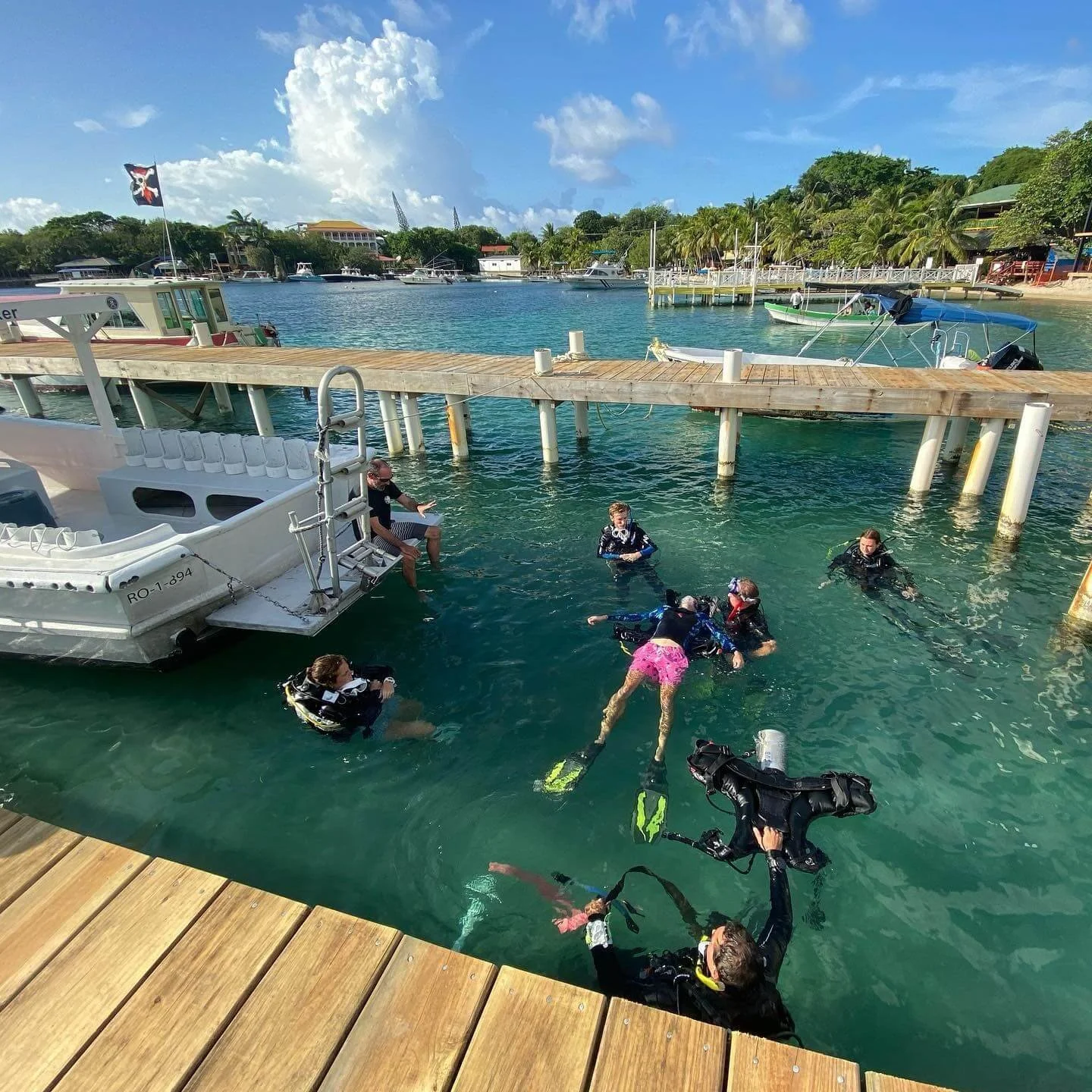
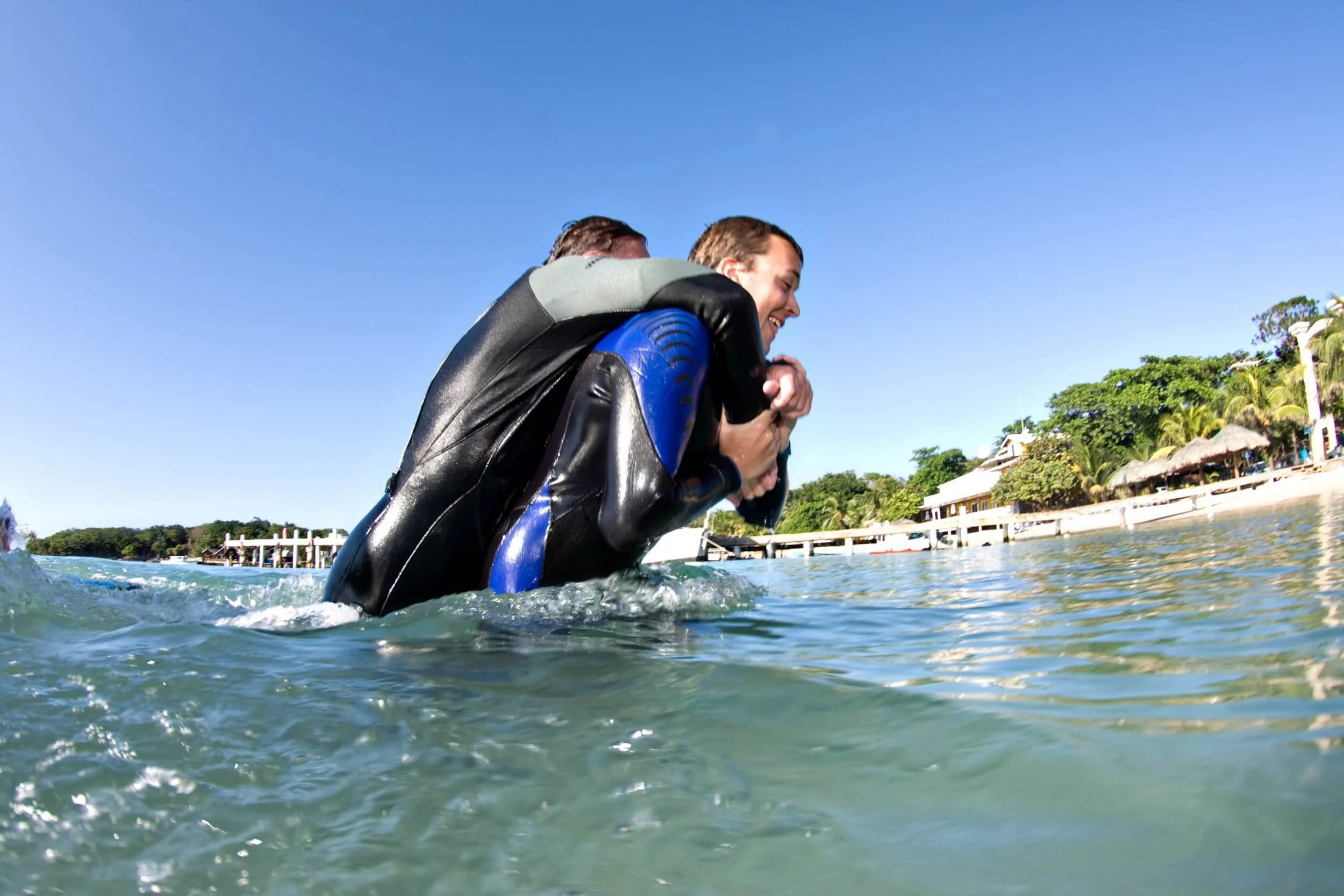
You'll work through five PADI eLearning sections covering emergency theory, then move into practical exercises in confined and open water. The bulk of the course is the ten rescue skill exercises — tired diver tows, panicked diver responses, missing diver search patterns, unresponsive diver recovery at the surface and at depth. The course closes with a two-scenario final assessment that brings the whole sequence together under realistic pressure.
- Five eLearning sections — emergency theory, accident management, equipment, decompression-related injuries, and missing-diver scenarios
- Ten rescue skill exercises — structured drills covering surface and underwater emergencies
- Two scenarios — staged rescues that you have to plan, communicate and execute under time pressure
- Around 3 to 4 days from start to certification
EFR prerequisite
Rescue Diver requires a current Emergency First Response (or recognised CPR/First Aid equivalent) certification. If yours has lapsed or you've never taken it, EFR can be added on for $145 — we can run the course alongside Rescue Diver so it doesn't extend your time on the island.
The course that changes how you dive
Ten skill exercises, two staged scenarios, one shift in attitude
Self-rescue, buddy rescue, and emergency management — every dive boat wants you to have it.
What's included
$400 all-inclusive
- Tuition with a qualified PADI Rescue Instructor
- PADI eLearning access — Rescue Diver materials
- PADI Rescue Diver certification fee
- All scuba equipment rental for the duration of the course
- All boat fees for the open water rescue scenarios
EFR add-on ($145) and the Roatan Marine Park fee are separate.
What it's like in Roatan
Ideal water for scenario work
Calm, protected water in the West End bay means scenarios run the way they're meant to — without swell making a tired-diver tow brutal, or current pulling the search pattern off-target. Instructors stage realistic situations on the surface and at depth without having to fight the conditions.
Most candidates spend their final scenario day on the same reef sites where they ran the skill drills earlier in the week. The familiarity gives you headspace to think about the scenario rather than the site.
Skills you hope you never need
Built around scenarios, not lectures
Most divers describe Rescue as the most rewarding course in the recreational chain.
Requirements
Who can take this course
- PADI (or recognised equivalent) Advanced Open Water Diver certification — or Adventure Diver with the Underwater Navigation Adventure Dive completed
- EFR Primary & Secondary Care current within the last 24 months (or take it with us — $145)
- Minimum age 12
- PADI medical statement signed
Take the course that makes you a better diver
Get in touch to book Rescue Diver — we'll line up EFR alongside if you need it.